












The ENE film crew recently returned from a fascinating trip on Maine’s Penobscot River hosted by Mahoosuc Guide Service and members of the Penobscot Indian Nation. Called “Way of the Wabanaki,” the immersive, four-day experience took place on the Penobscot River and Sugar Island in Passadumkeag, where our group camped and learned about Penobscot culture, birch-bark-canoe building, basket making, plant identification and uses, traditional hunting techniques, and the tribe’s rich oral history.
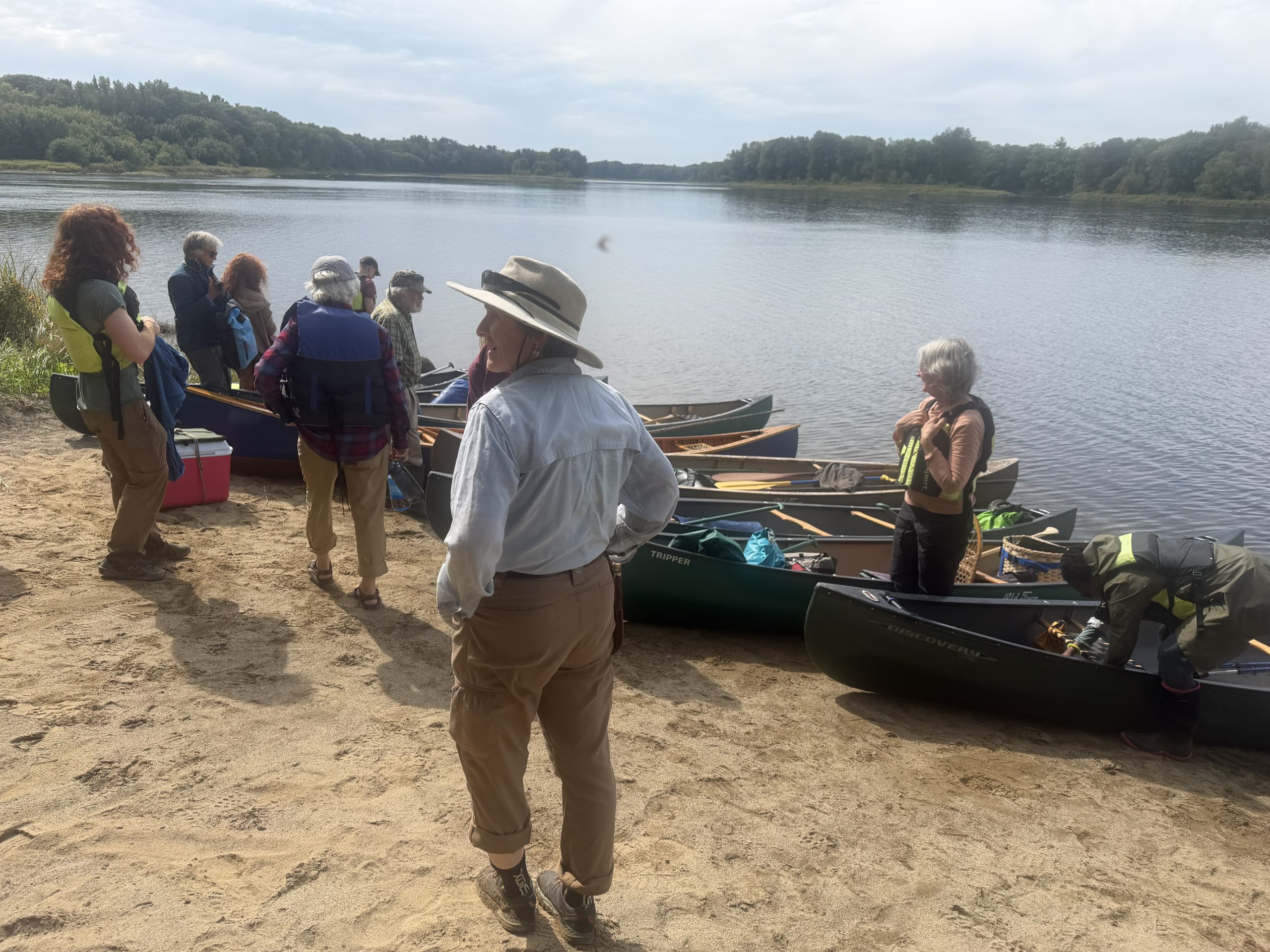
We kicked things off at the Black Bear Inn in Old Town on a Thursday morning. Mahoosuc owners Polly Mahoney and Kevin Slater gathered the group to go over the itinerary and make introductions then everyone took turns telling us a bit about themselves and what they hoped to gain from the experience.
With introductions over, we piled into a van with eight canoes in tow and headed north along the east side of the Penobscot. At the launch ramp in Passadumkeag, we unloaded canoes and gear, and received some basic paddling and safety lessons from the guides.
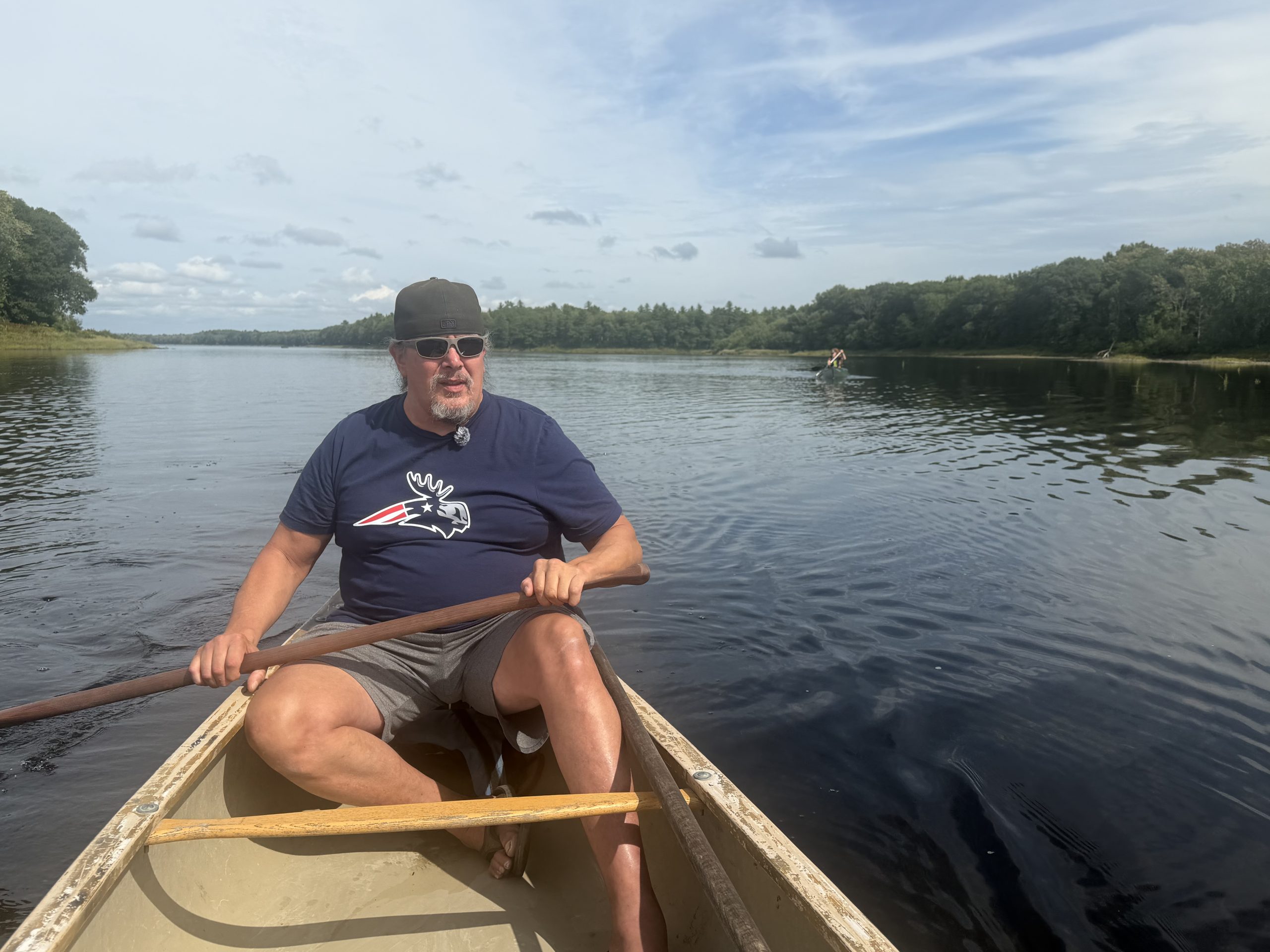
Finally, it was time to hit the water, so we piled into the canoes, shoved off, and headed downriver. Due to the recent drought, the Penobscot was super low, which made for some tricky navigation in places. However, everyone made it safely to our designated lunch site on Olamon Island. Along the way, we were treated to several bald eagle sightings, and I learned a thing or two about the Penobscot’s fish species from my paddling partner, Ryan Mitchell, a member of the Penobscot Nation, which is based in Old Town.
After lunch, we continued downriver to Sugar Island, our home for the next three nights. After hauling gear, food and water into camp, the group set up tents or moved into the well-built lean-to’s. Incidentally, over 200 islands on the Penobscot River, from East Millinocket to Old Town, are owned by the Penobscot Nation.
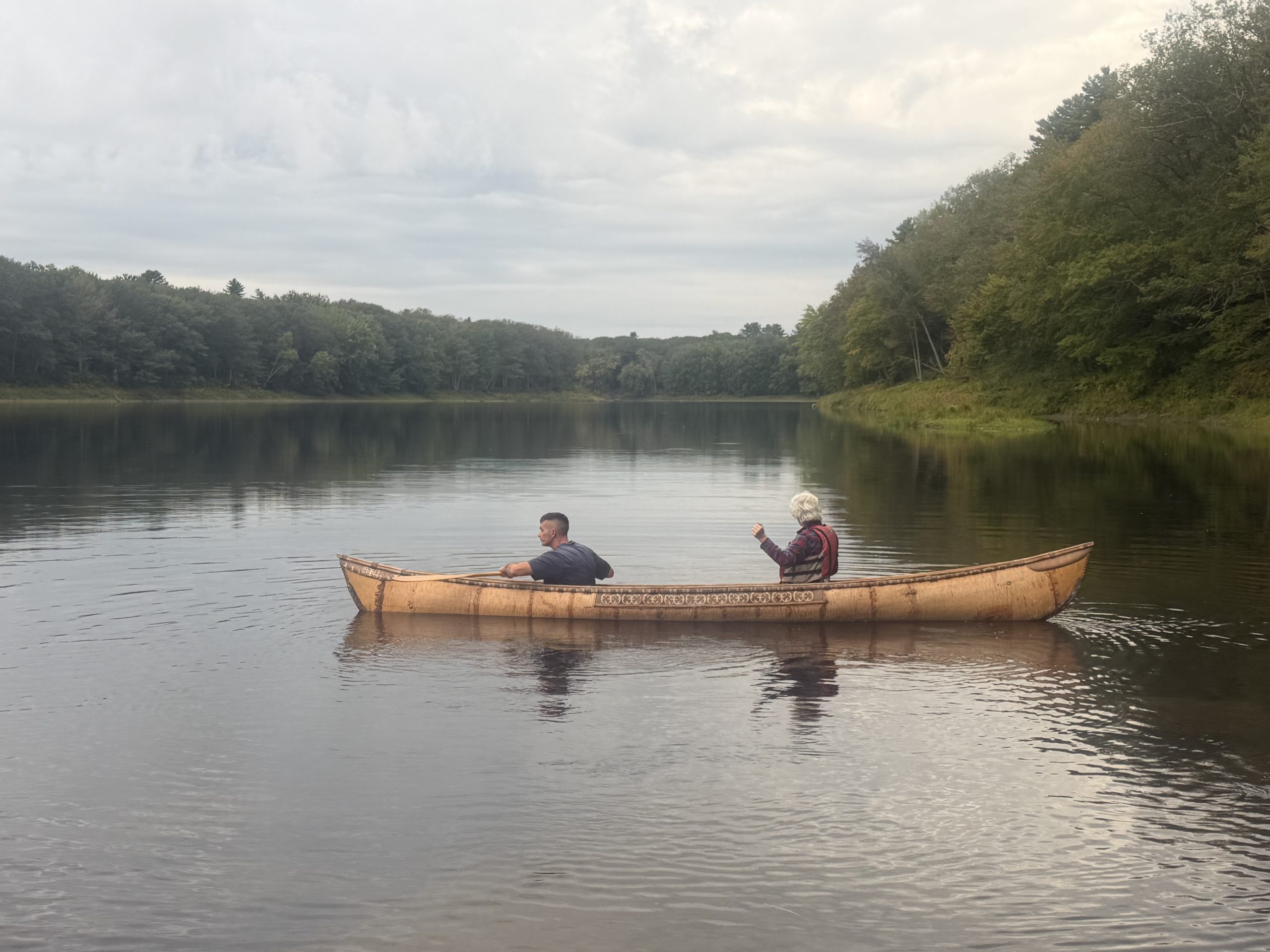
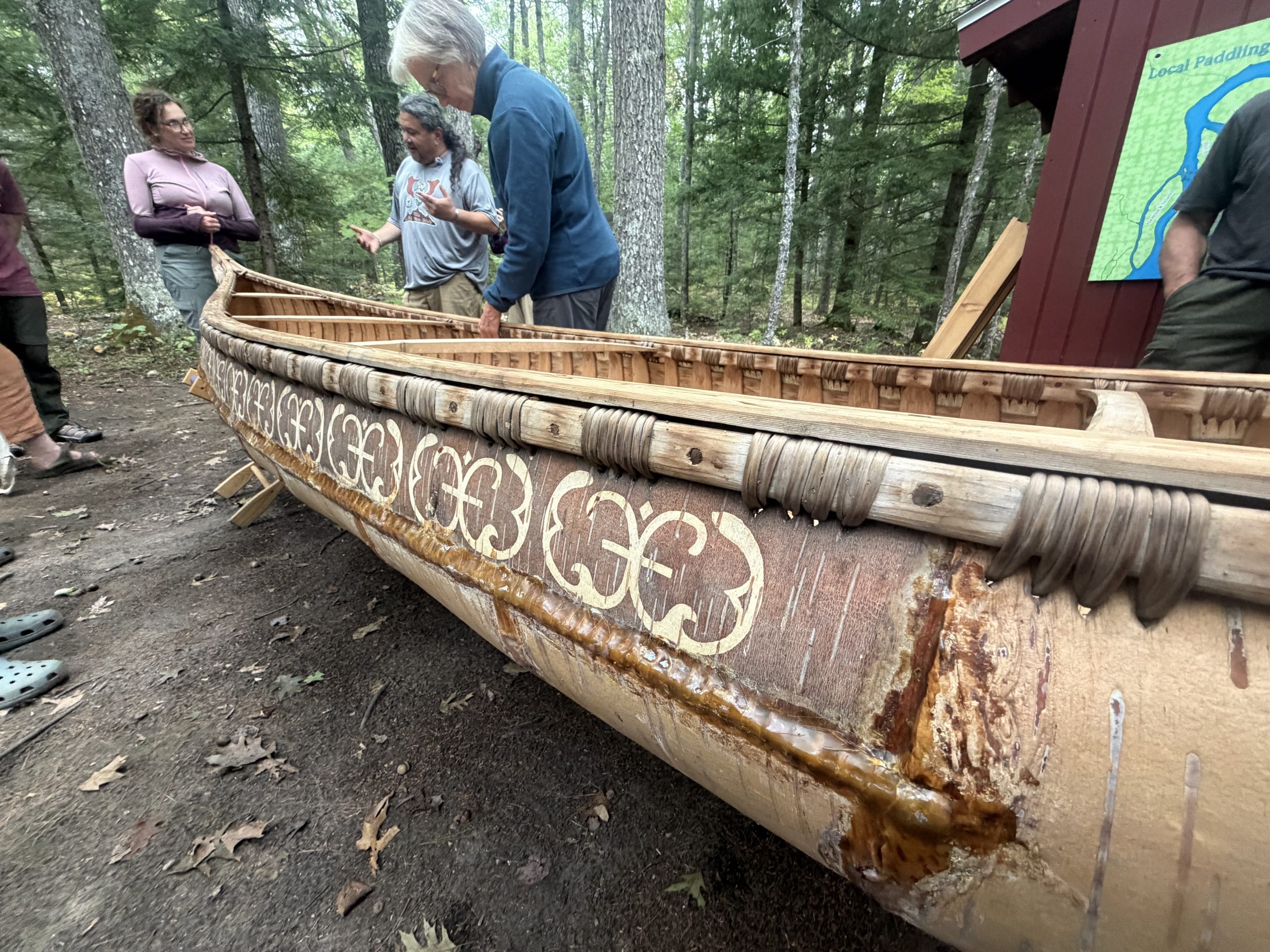
Late in the afternoon, we gathered around the campfire to learn about birch-bark canoes and how they are built. Penobscot canoe builder Jason Pardilla explained how the bark is painstakingly harvested from large, mature birch trees, which are becoming increasingly rare in the Northeast. Indeed, Jason must often travel far north to find the appropriate size trees for his canoes. The de-barking process does not kill the birch, although the same tree cannot be used twice. Once the bark is laid out, it’s stiffened with cedar ribs, gunwales, and stringers, and lashed to the frame with spruce roots. Seams are covered in pine resin to make them watertight.
The resulting canoe is incredibly light and responsive, even by modern standards, and can last for decades if properly cared for. Many in the group got a chance to paddle one of the amazing vessels on the river. They truly are works of art.
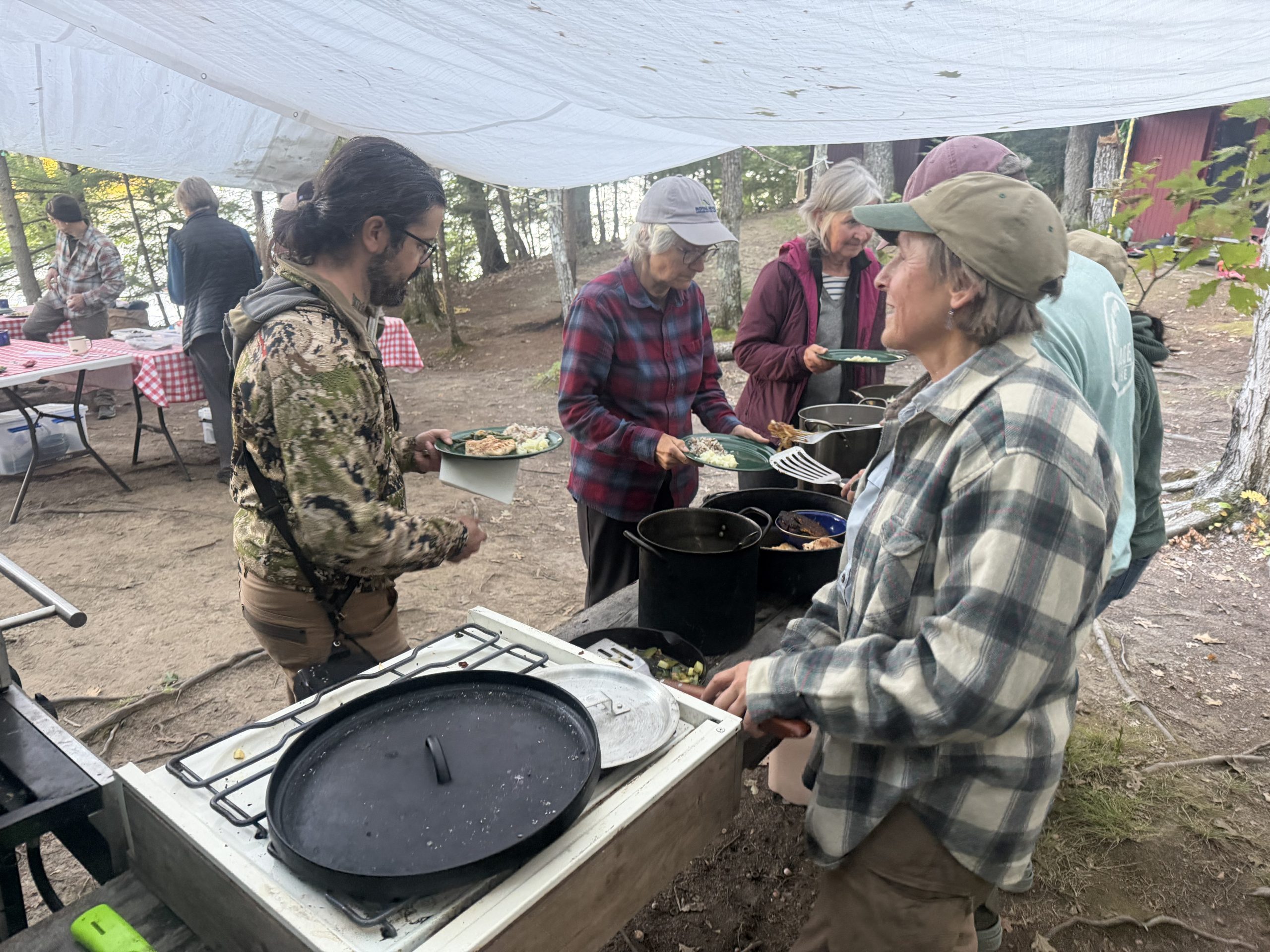
After dinner, we all reconvened around the fire, where James Francis, Director of Cultural and Historic Preservation for the Penobscot Nation, wrapped up the busy day with origin stories of the Wabanaki people and explaining which tribes belonged to the Wabanaki Federation.
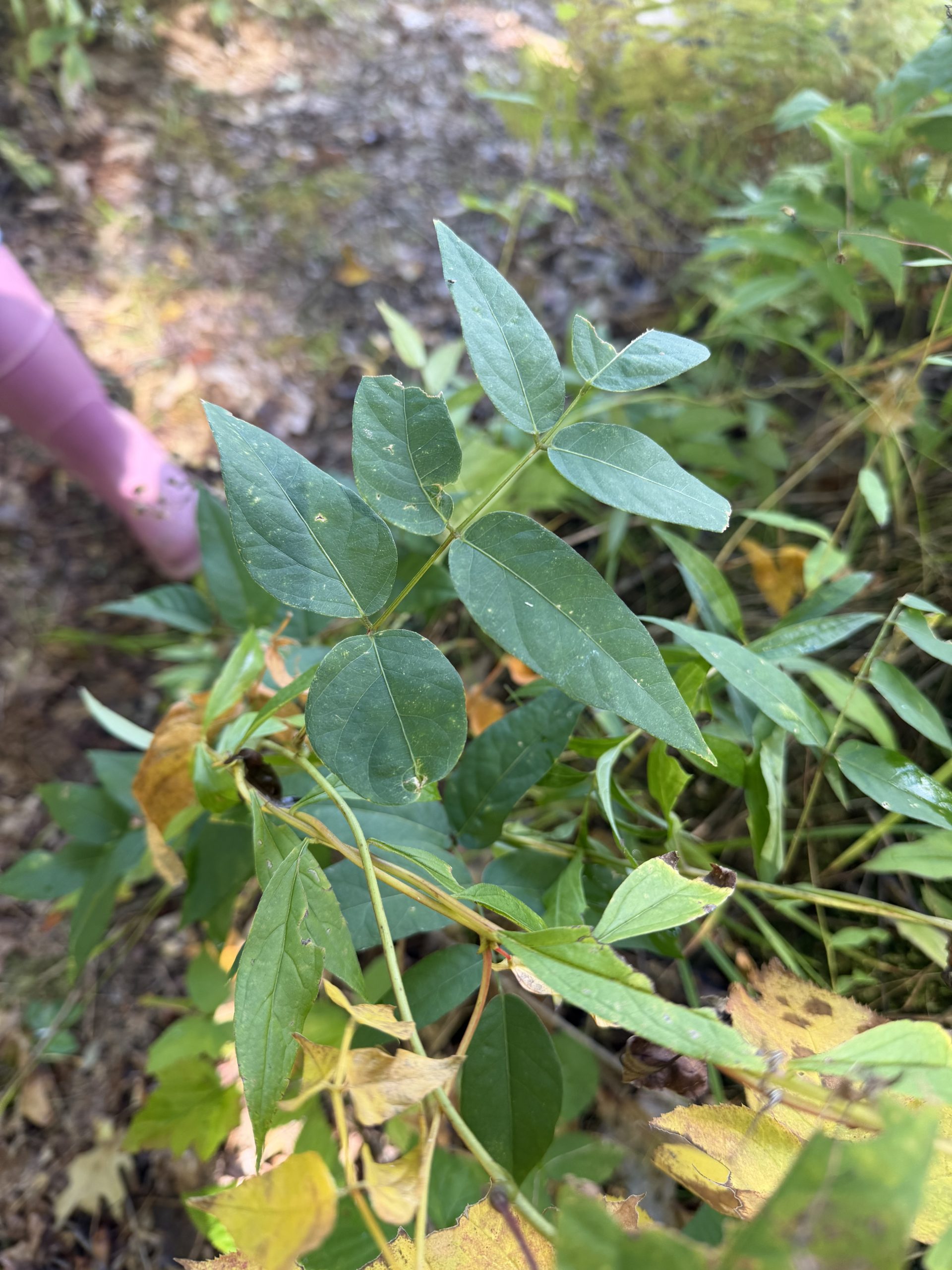
The next morning everyone was up early for a delicious breakfast and coffee. This was followed by a plant-identification walk led by Jennifer Neptune. Jennifer pointed out countless bushes, grasses, trees, and fungi along the way, explaining their medicinal or edible value in Penobscot culture. It seemed there was a use for virtually every plant we encountered!
After lunch back at camp, we had some down time, which I used to capture footage of local forest birds. These included numerous wood thrush and several piliated woodpeckers, which were abundant on the island, perhaps due to its many old-growth trees.
In late afternoon, Jennifer led us on a short hike to the former homestead of one John Susep (aka Johnny Basshorn), a Penobscot who farmed on Sugar Island many years ago. We examined the remains of his home—a stone foundation built by hand—and his well.
That evening, James Francis returned to the island to continue his fireside narrative on Penobscot history, which included some uncomfortable truths about post-contact atrocities carried out by the British and colonial settlers.
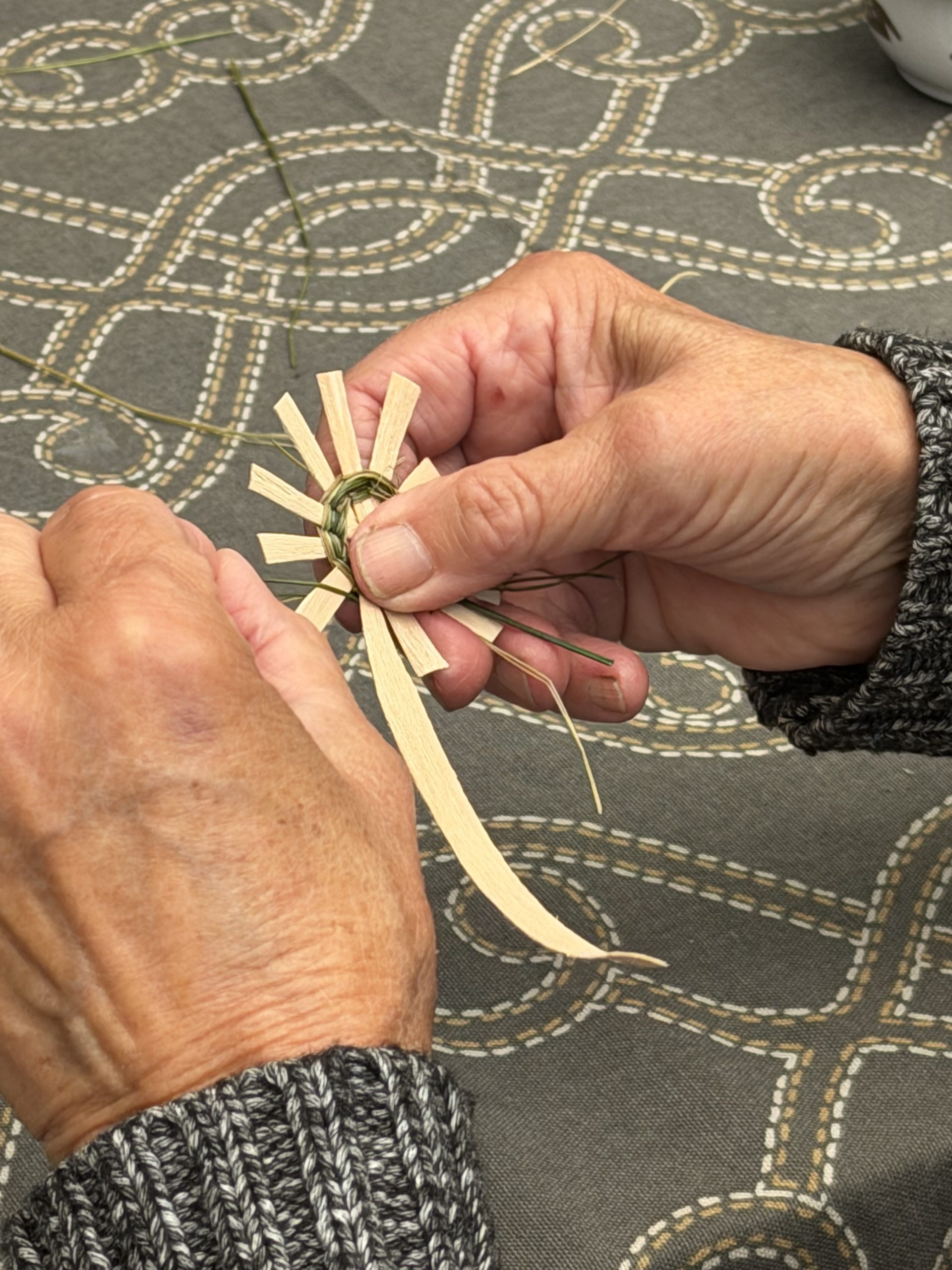
On Saturday morning, after pancakes and bacon, we learned the basics of traditional Penobscot basket weaving. Using small strips of black ash and long sweetgrass stems, we crafted bookmarks with the same techniques used for baskets, but on a smaller scale.
After lunch, cameraman AJ Derosa and I packed our gear are paddled across the river to retrieve our respective vehicles and head for home. It was hard to leave, as we had bonded with our fellow travelers, as well as the guides. Also, we would miss the final activities scheduled for the next day and a half. These included a clay-pot making demonstration, an evening drumming performance, moose-calling techniques, and a visit to the Penobscot Nation Museum on Indian Island, which contains thousands of items and artifacts relating to the tribe’s culture and history.
Overall, we had a great time on the trip, and you’ll get to experience much of it when our episode on the “Way of the Wabenaki” premieres in 2027.