












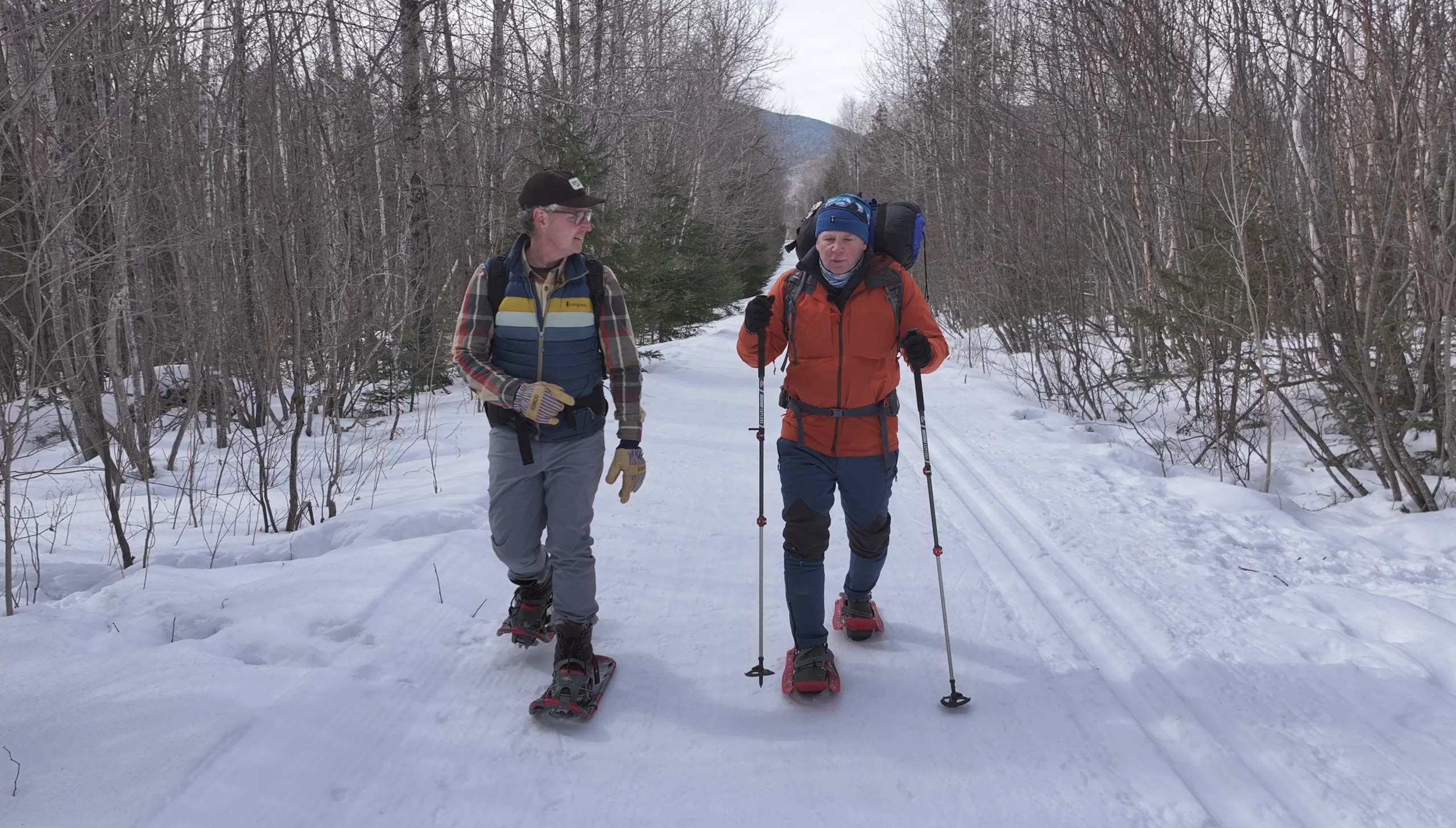
Last week, I experienced a fun snowshoe trek and overnight stay on the Maine Huts & Trails network in Carrabassett Valley. First opened in 2008 and modeled on the hut-to-hut hiking experience found in Europe and New Zealand, MH&T is a trail network linking a series of welcoming, eco-friendly “huts” where snowshoers, Nordic skiers, and fat-tire bike riders can spend the night, get a hot meal and shower, and commune with likeminded outdoorsy travelers.
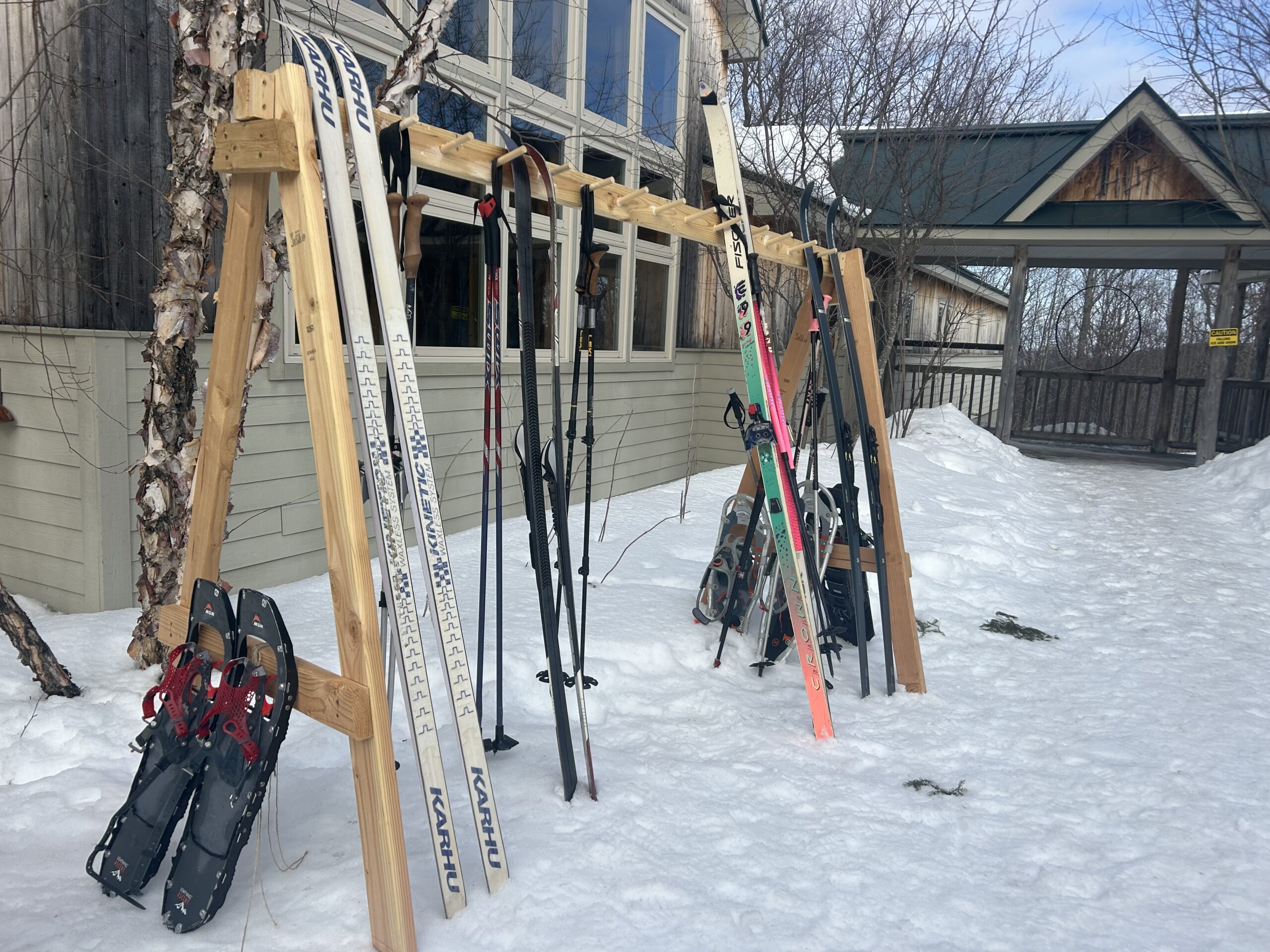
To begin this trip, cameraman Halsey Fulton and I met up with MH&T executive director Wolfe Tone at the Stratton Brook Hut parking lot just north of Sugarloaf Mountain. After chatting a bit about what to expect, we strapped on our snowshoes and crunched off toward the Stratton Brook Hut, a distance of just over three miles.
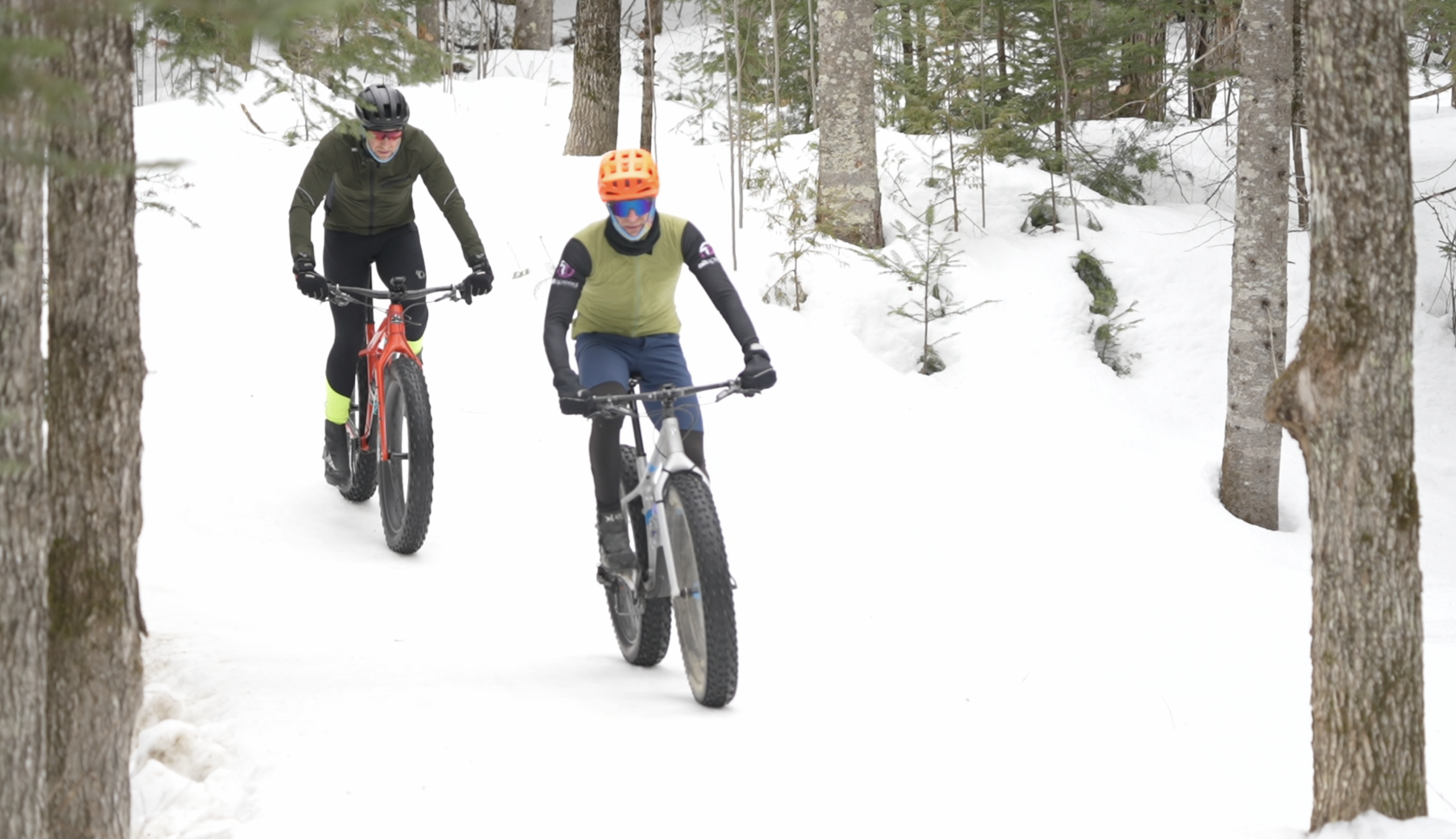
In winter, MH&T’s crew groom 25-plus miles of trails out of MH&T’s 50-plus-mile network, although in our case, early March’s freeze-thaw cycles had created icy conditions in some spots, making Nordic skiing slightly more challenging. The MH&T trails also link with others in the area, including the Narrow-Gauge Pathway (groomed by the Sugarloaf Outdoor Center) and various mountain bike trails maintained by the local Carrabassett Region chapter of the New England Mountain Bike Association.
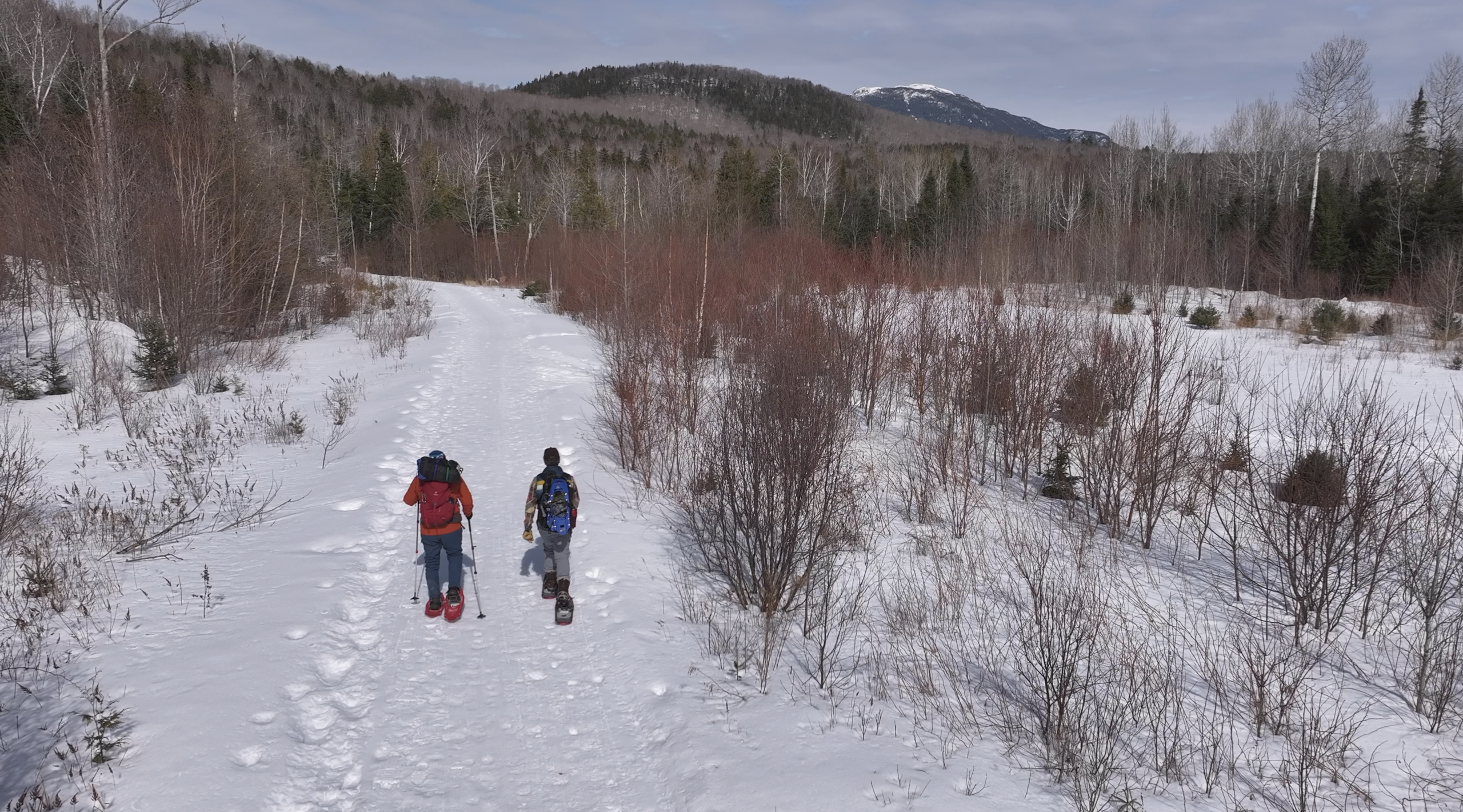
It should be noted that these trails are not especially challenging or steep. The trek to Stratton Brook Hut took us around 1.5 hours, with an elevation gain of some 600 feet, most of it over the last 3/4 mile. As Wolfe explained, the four huts in the MH&T system were purposely spaced to allow an average hiker or skier to easily access them in a day. Fat-tire bikers can cover even more ground.
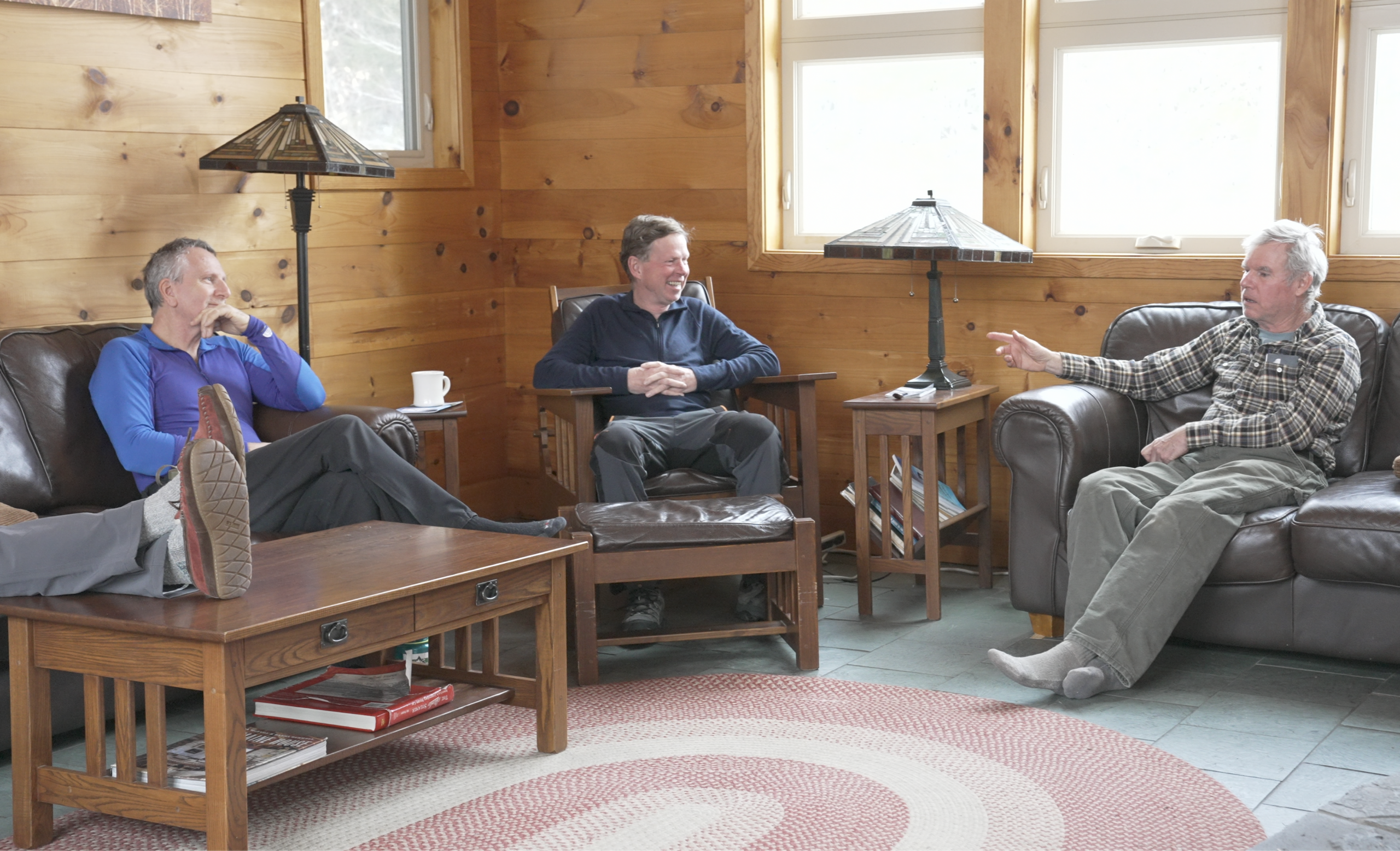
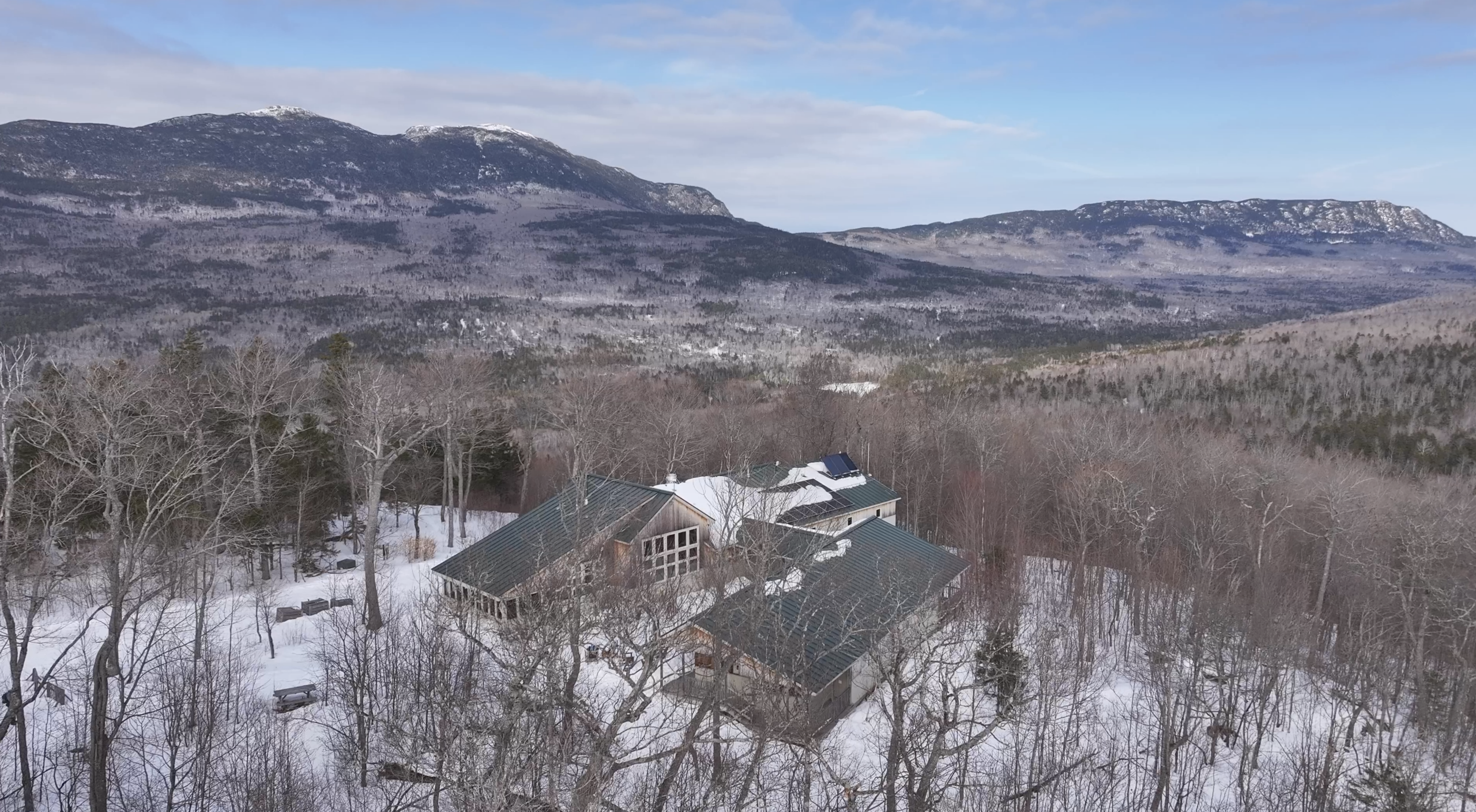
We arrived at Stratton Brook Hut around 1:00 p.m., and, after taking in the sweeping view of the Bigelow Range to the north, made our way inside for some hot chocolate and tea. Wolfe also introduced us to the hut staff of Sophie Wanzer, Ben Ward, and Heloise Bampton, who prepare meals, clean the huts, and keep everything running smoothly through the winter season, which begins in December and runs into March, depending on weather and trail conditions.
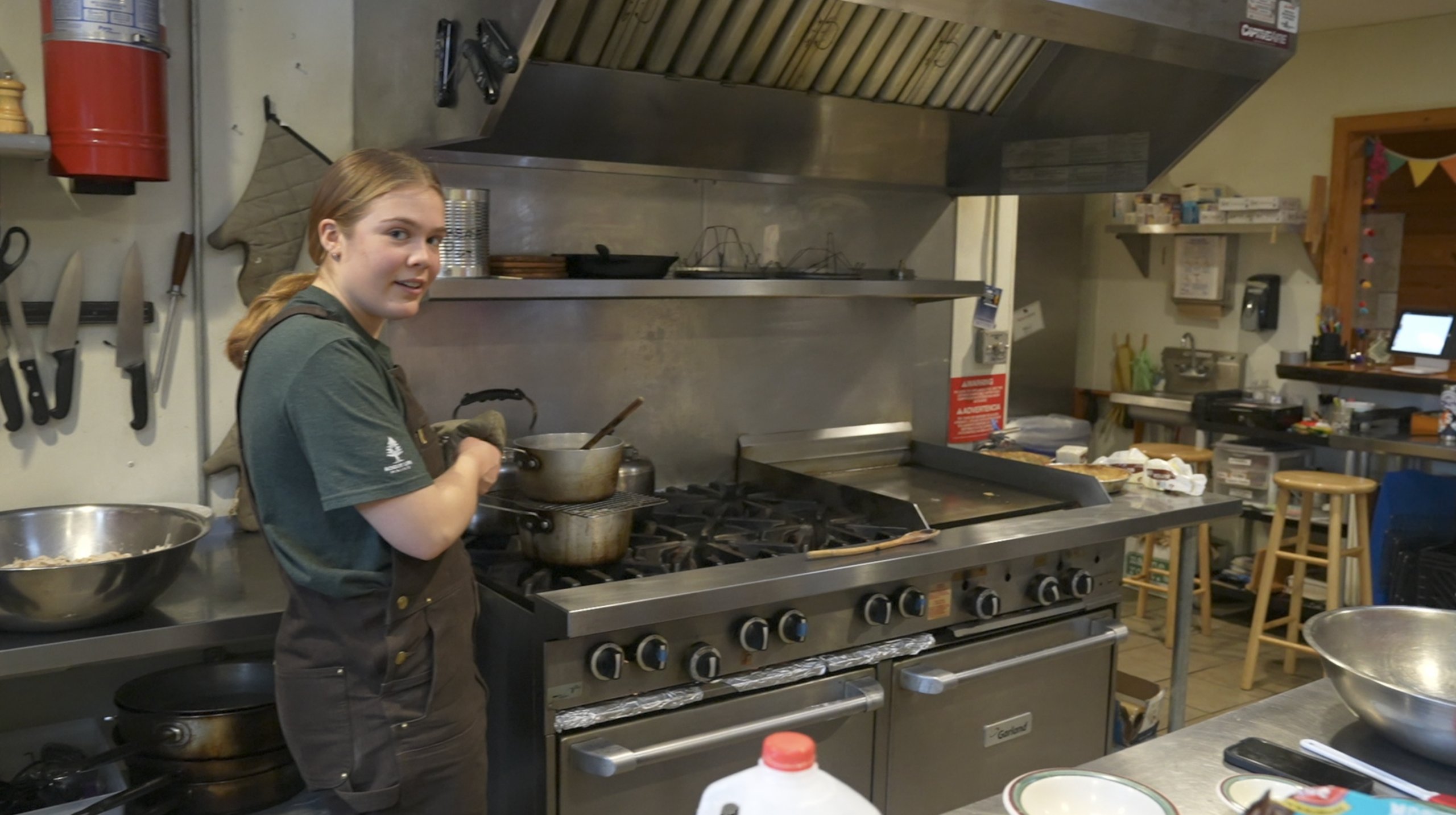
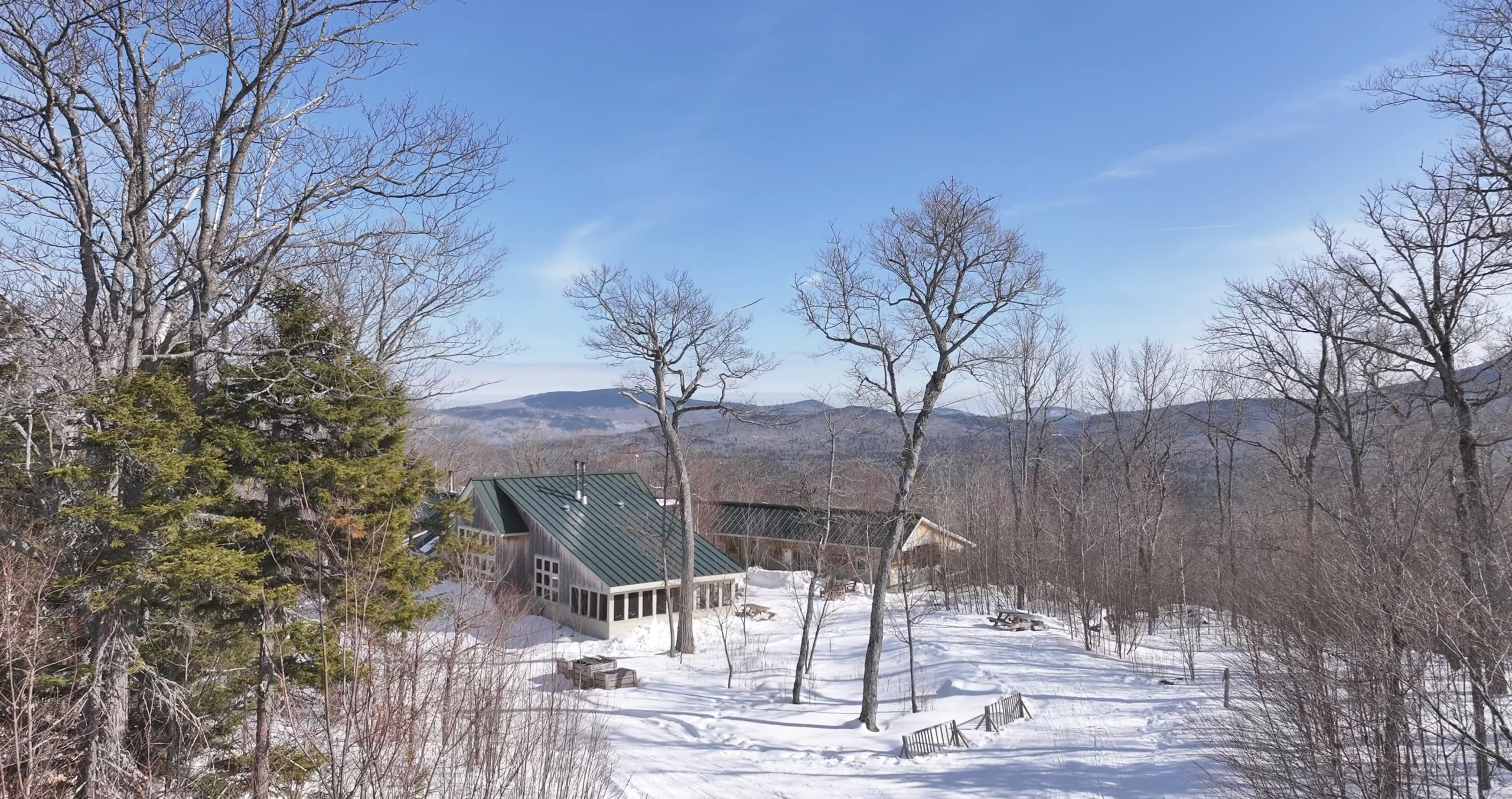
The huts themselves are surprisingly large, wood buildings that can sleep upwards of 40 people (Wolfe’s favorite expression when people first lay eyes on the huts is: “That’s a hut?”). While each hut is different and has its own “personality,” all comprise communal bunk rooms, a bathroom with hot showers and innovative composting toilets, a large, well-appointed kitchen, and a spacious dining area/lounge where guests can hang out, play board games, and warm up by the wood stoves.

As mentioned, the huts are eco-friendly and designed to be self-sufficient. Heat is provided by efficient wood-burning Tarm furnaces (each hut burns through about 12 cords of wood per season), which provide hot water for the radiant floor system, faucets, and showers. Solar panels and batteries contribute to electrical needs, while expansive south-facing windows in the dining room/lounge admit lots of sunlight to warm the interior through the day.
The bunks are outfitted with just a mattress and pillow, so you must bring your own sleeping bag and pillowcase, as well as a towel for showering. The bunk rooms are heated to around 50 degrees, so there’s no need for an expensive, high-tech sleeping bag. Additional blankets are available, however.
As for meals, you can opt for the full meal plan (available from Thursday through Sunday), or the DIY plan. The former includes breakfast and dinner prepared by the hut staff, as well as an optional bag lunch. Vegetarian options are available.
On my stay, we were treated to a dinner of Mediterranean-style chicken with flatbread, while dessert was homemade oatmeal cookies, fresh from the oven. Breakfast included one of the best sausage, egg and cheese frittatas I’ve ever tasted, prepared by Ben. By the way, a wide selection of craft beer and wine can also be purchased at the Huts—credit cards accepted!
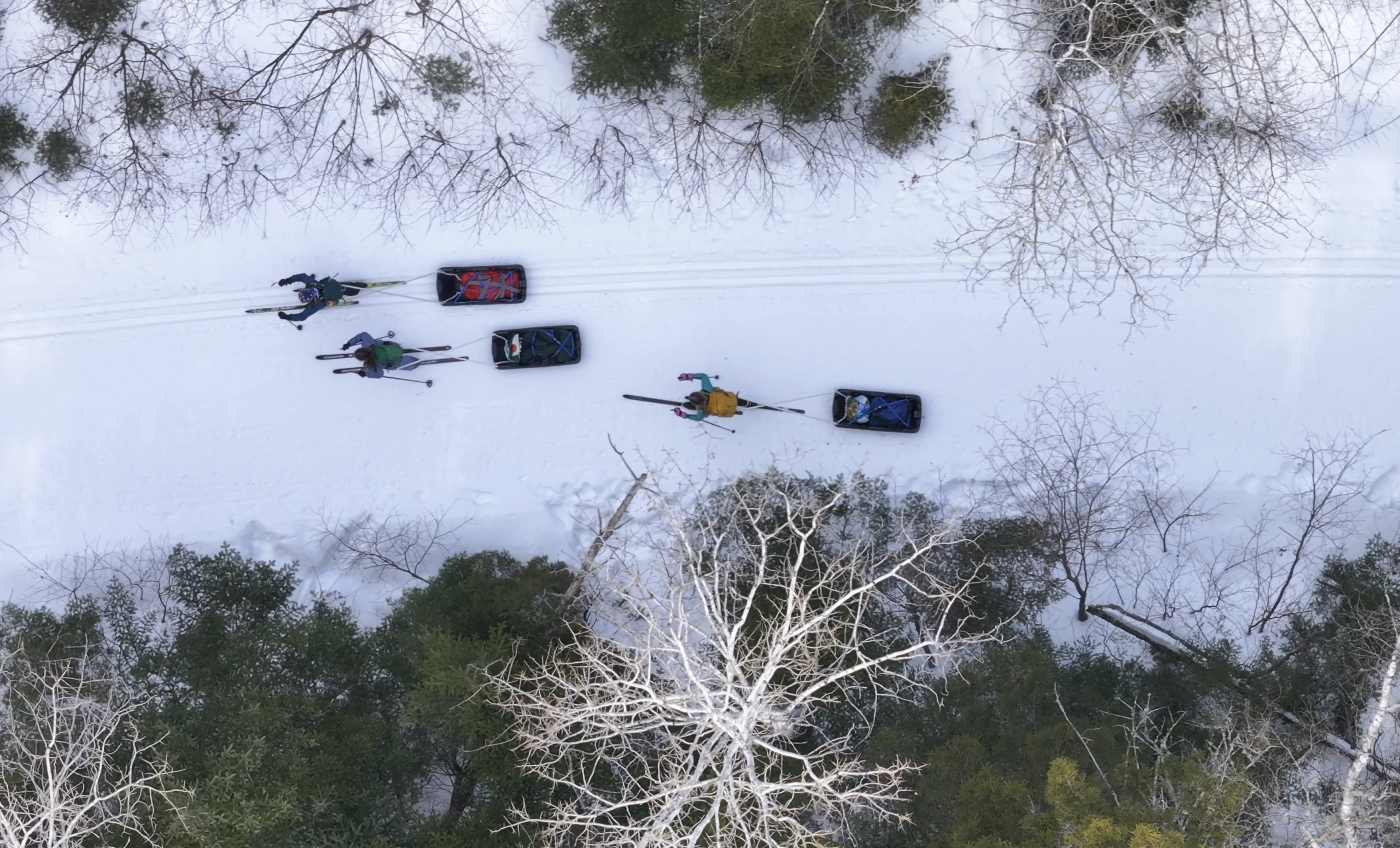
If you travel early in the week (Monday-Wednesday), you’ll need to pack your own food. Fortunately, you’re allowed use of the kitchen facilities, as well as pots, pans, plates and utensils, all of which you’ll need to clean afterwards.
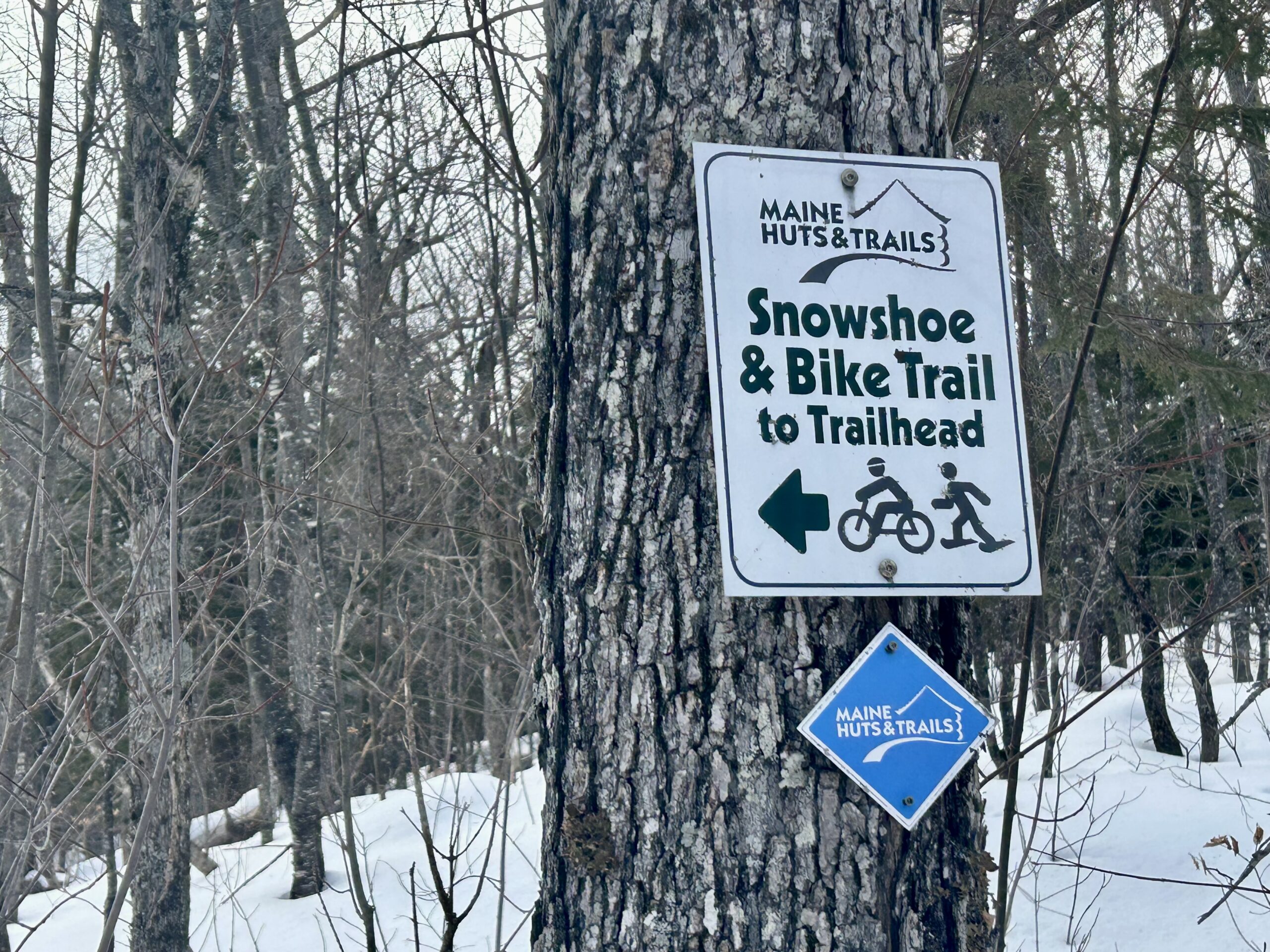
While the huts are equipped with satellite communications to support their operations, the objective is to disconnect during your journey, and cell coverage is spotty to sparse. It’s important to note that MH&T does not provide rescue or emergency evacuation services. Therefore, you need to be self-sufficient on the trails. As Wolfe explained, “this is a backcountry experience,” so you need to monitor the weather and be able to self-rescue in the case of an injury or medical emergency. Fortunately, none of the wide, well-marked trails are difficult to navigate, and are shown on apps such as AllTrails and Onyx.

Overall, I had a wonderful time on my first Maine Huts & Trails adventure. My only regret is not having enough time to visit some of the other huts. That will need to wait until next winter. In the meantime, the ENE team will be working on a new episode based all the great footage we captured, to air later this year. We’ll keep you posted.
If you’re interested in booking a trip or learning more, visit the Maine Huts & Trails website.