













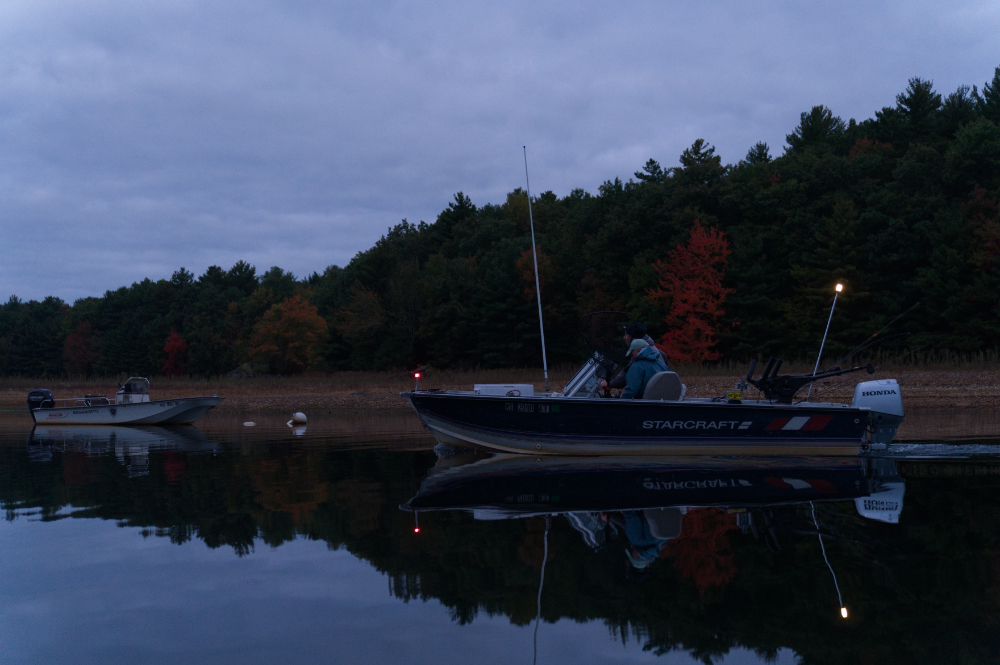
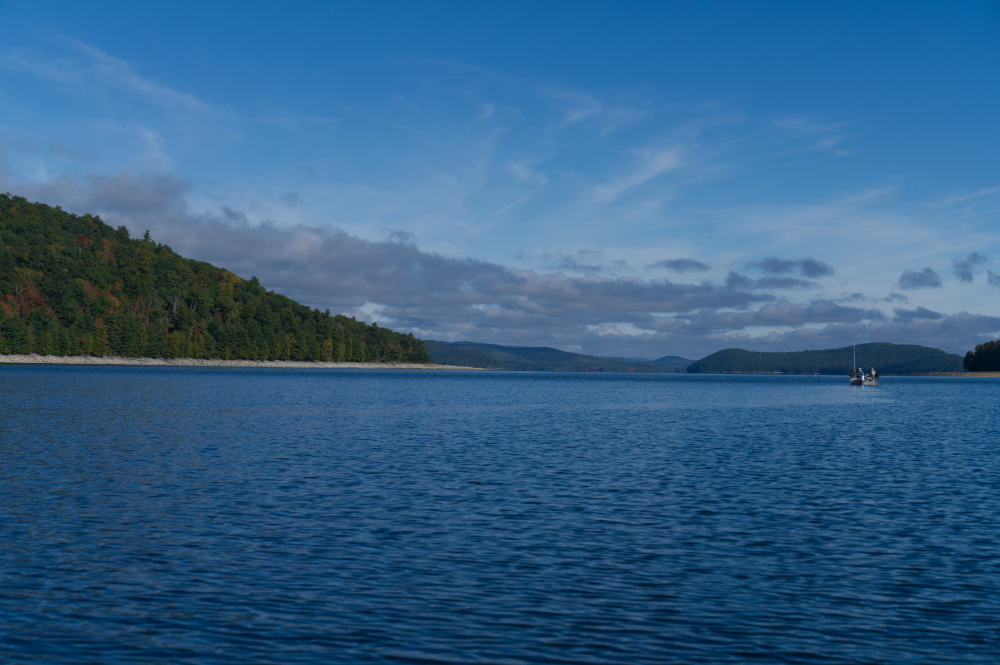
On September 30, 2026, I spent a fascinating morning of fishing on the Quabbin Reservoir in central Massachusetts, hosted by Quabbin Fishermen’s Association President Clayton “Syd” Sydla. It was not yet light when cameraman AJ Derosa and I met Syd at Gate 43 in Hardwick, where we launched Syd’s 16-foot Starcraft at Fishing Area 3 and headed out to the main part of the reservoir.
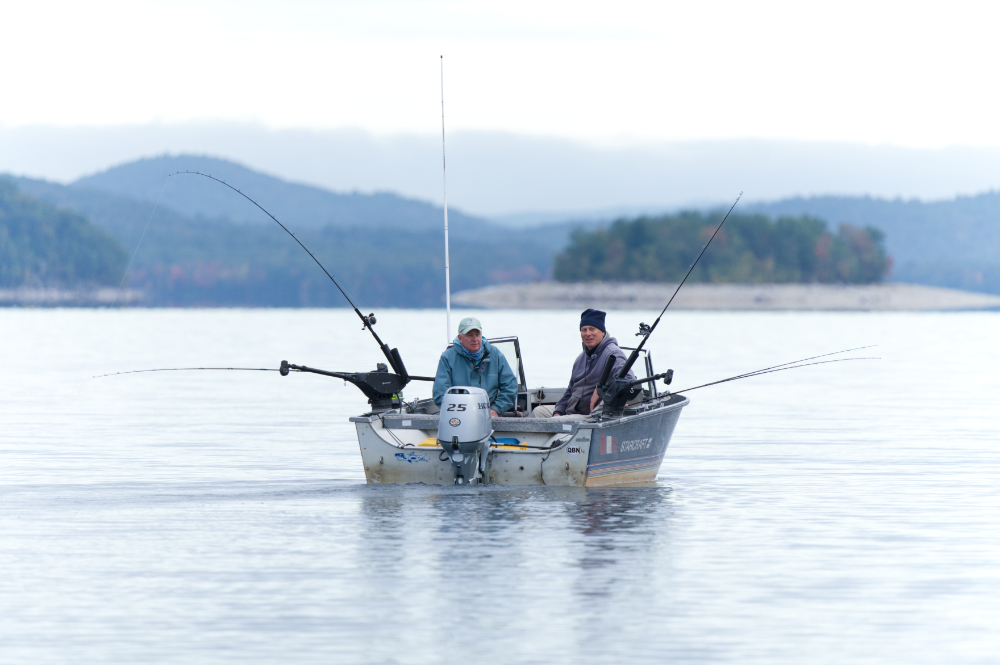
Boating on Quabbin is a remarkable experience, one reserved only for anglers. That’s right: Canoes, kayaks, sailboats, and motorized non-fishing craft are not allowed on most of the reservoir (kayaking is permitted in a small northern section). To fish here, anglers may rent a small, outboard-powered aluminum boat managed by the state’s Department of Conservation & Recreation, and must possess a Safe Boating Certificate, a fishing license, and fishing tackle. Anglers can also trailer their own boats to the Quabbin, but must adhere to a strict inspection process to prevent invasive species from entering the reservoir.
As we threaded our way through meandering channels toward open water, Syd explained how the current water level (the reservoir was down by about 12 feet) had exposed lots of rocks, sandbars and other hazards normally hidden below the surface. Such hazards can make boating on the Quabbin tricky for the uninitiated, so it pays to have a chart plotter and depthsounder, or at least a detailed printed chart. Just remember to subtract 12 feet from the printed depth markers! The rental boats are not equipped with any electronics, by the way.
Once we reached Syd’s favorite late-season salmon spot in some 100 feet of water, he set a trolling spread of four lines (Quabbin regulations permit two rods per angler) fished off downriggers and lead-core outfits to get the lures down deep to where the salmon and trout were holding.
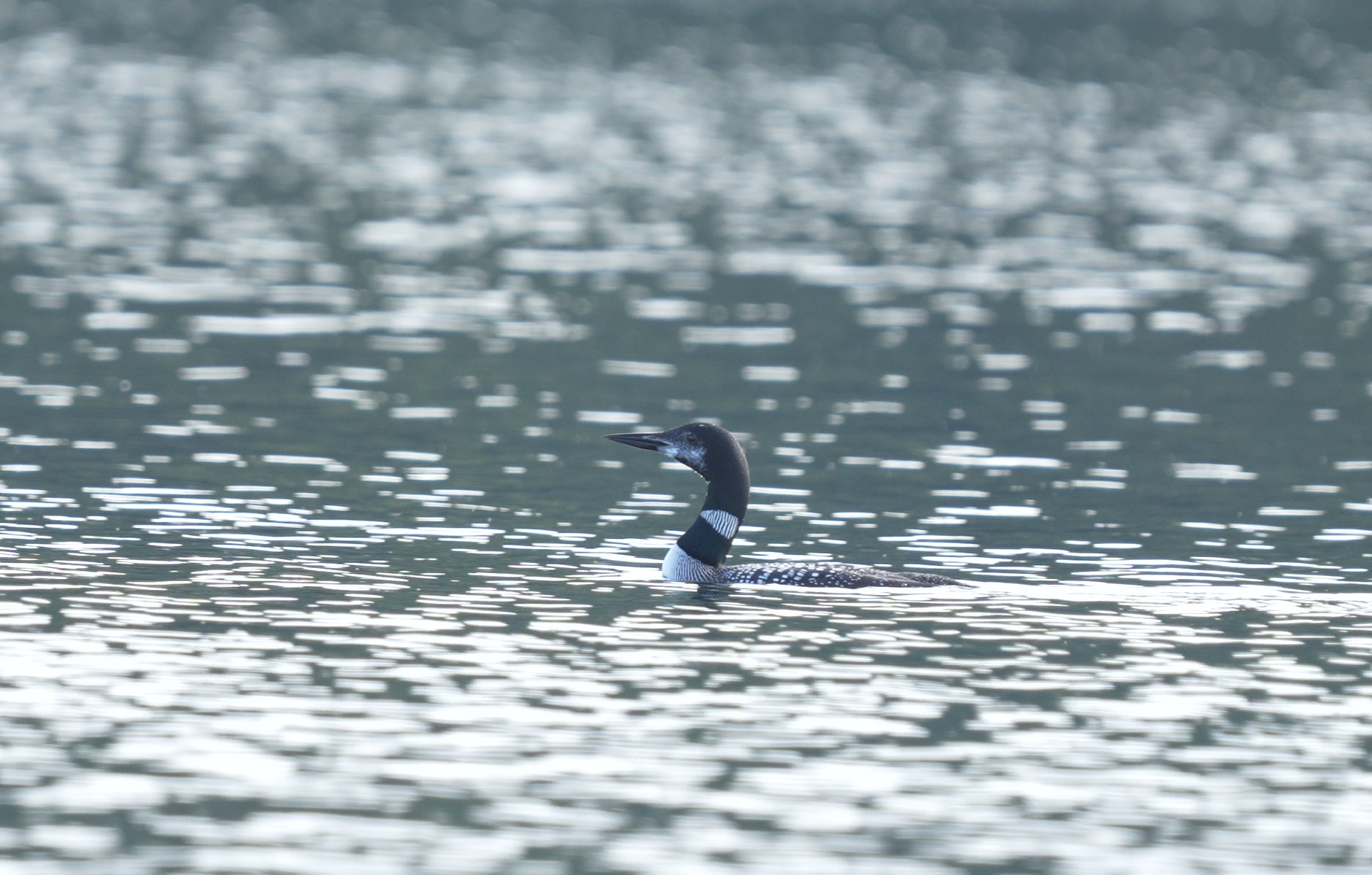
The salmon bite was pretty much over for the season, but we did manage to land a small lake trout after about an hour of slow-trolling. As we trolled, we saw a bald eagle and numerous loons. In fact, it seemed as if we were fishing a remote lake in northern Maine, given the lack of manmade structures along the heavily forested shores and lack of boating traffic. It was hard to believe we were less than two hours from Boston!
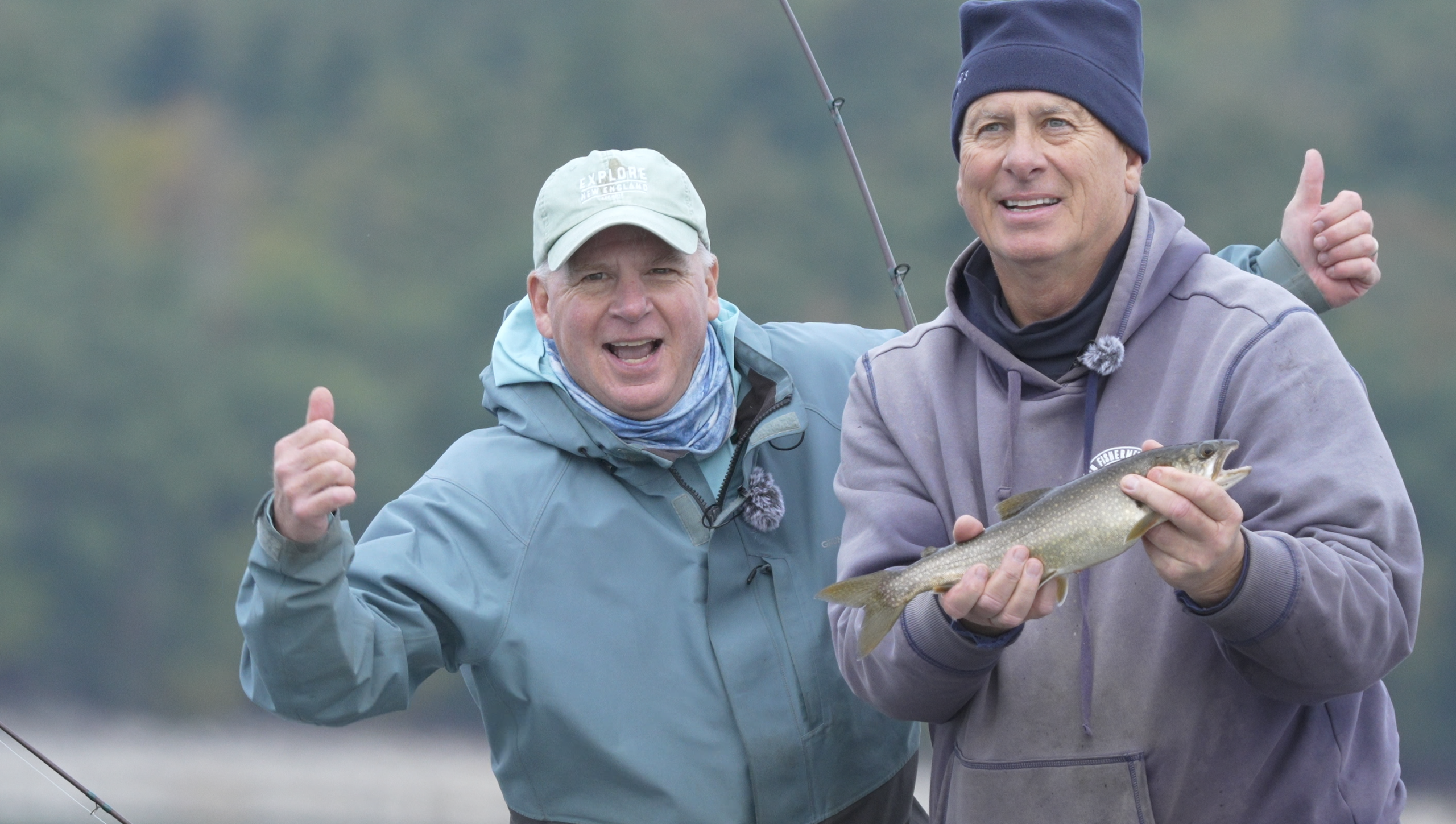
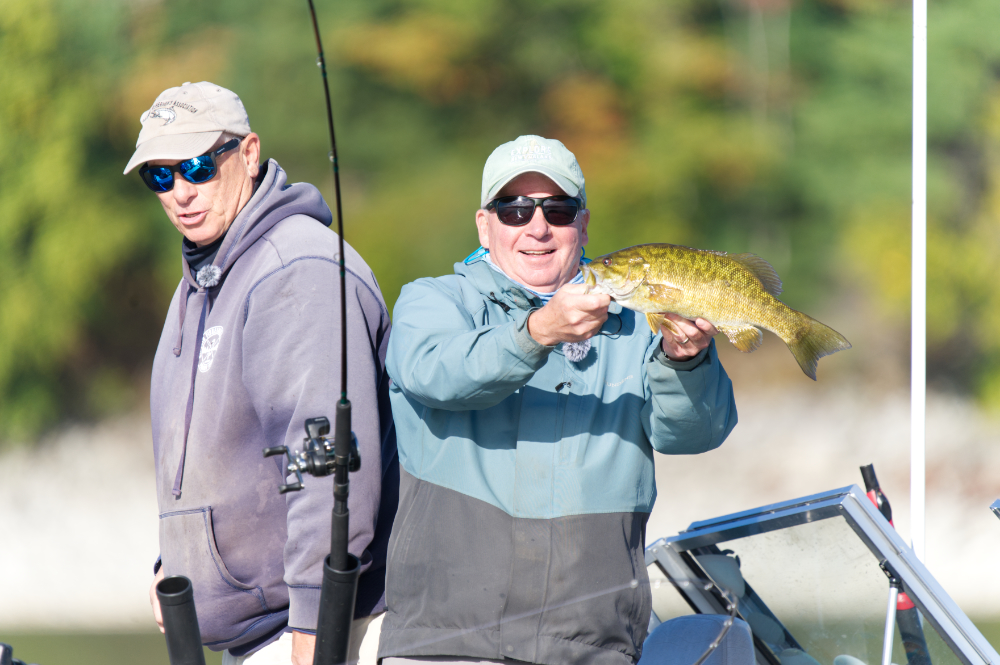
Later in the morning, we turned our attention to the Quabbin’s plentiful smallmouth population by trolling in a shallower basin known as the “Golf Course” (site of a former golf course that was flooded when the reservoir was created in 1938). We marked lots of fish on Syd’s depthsounder and soon landed a 2.5-pound beauty. Syd told me that the local smallmouth can reach 5 pounds or more, and lots of smaller fish provide fast action all season. He likes to target the bigger fish using live yellow perch, which are also abundant.
Following our morning of fishing, AJ and I unloaded a pair of bicycles and pedaled off to explore some of the Quabbin Reservation’s forested areas. Cycling is allowed inside the reservation of certain designated trails, mostly consisting of paved or formerly paved roads that existed prior to the creation of the reservation. No single-track mountain bike trails exist.
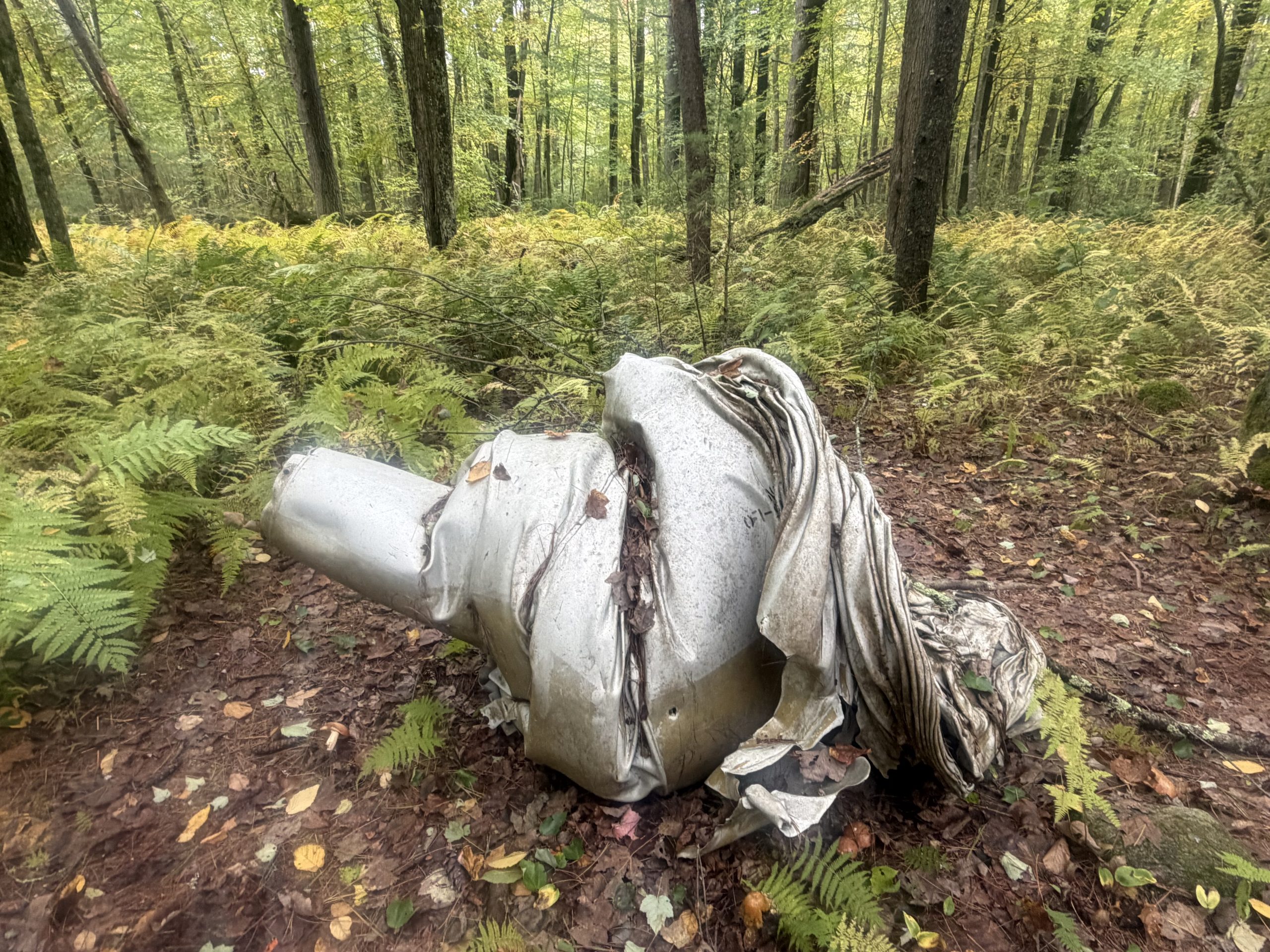
In our case, we biked a few miles through the woods and eventually located a hiking trail that led to the wreckage of an F94 Starfire military jet that crashed in the woods in 1955. After essentially running out of fuel, the pilot safely ejected and sent to plane plummeting into what he assumed to be the waters of the Quabbin. However, the jet ended up in the woods, where it was discovered some five years later. Today, crumpled pieces of metal still litter the cratered site. (By the way, this is the second military-plane crash site ENE has visited, the first being the B17 crash site on Elephant Mountain east of Moosehead Lake.)
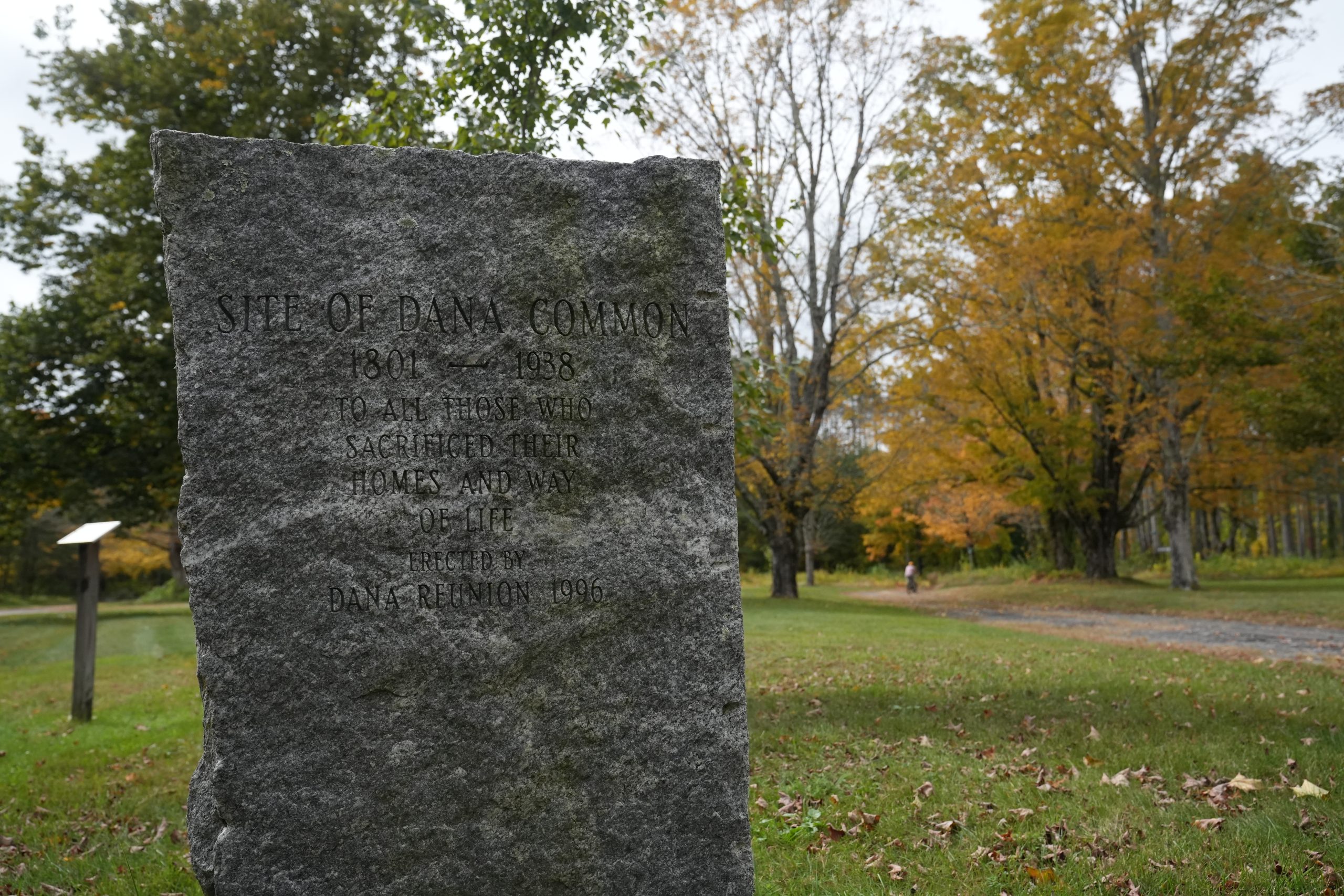
AJ and I continued our cycling journey through the woods until we arrived at the former site of the Dana Town Commons. Dana was one of the four towns that were forced via eminent domain to disincorporate to make space for the Quabbin Reservoir and Reservation. The structures were removed, save for the stone walls, foundations and cellar holes, while the cemetery graves were relocated to the Quabbin Cemetery in Ware. Today, you can easily imaging what would have been a quiet New England village with stately maple trees lining the lanes. Visiting the place was really quite eerie.
If you want to see what Dana Commons must have looked like in the 1920s, pay a visit to New Salem, home to a modern art museum and New Salem Cider, our last stop of the day. Here we met with 99-year-old Carol Hillman and her son, John, who own and run the cidery. We got a tour of the property and a lesson in cider making, followed by a sample of the Hillman’s excellent hard cider varieties. The place is situated on a hill overlooking the Quabbin, and served as the perfect spot to wrap up our busy day of filming!
Stay tuned for the Quabbin episode of Explore New England TV, coming your way in early 2027!