














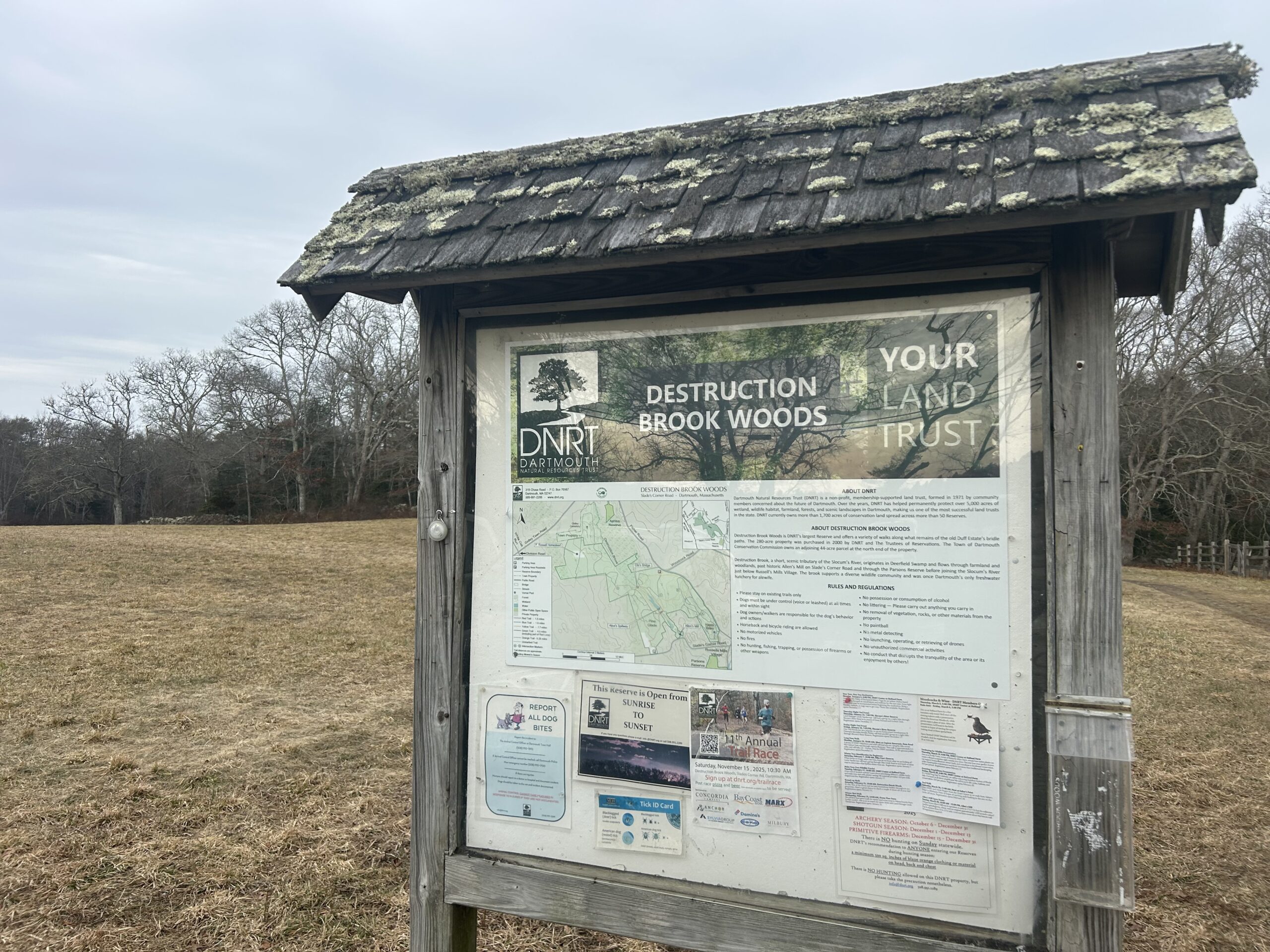
This 280-acre, dog-friendly parcel of protected land in South Dartmouth, Massachusetts, makes for a terrific short hike or mountain bike ride. And in winter (if it snows), you can explore the place on snowshoes and cross-country skis.
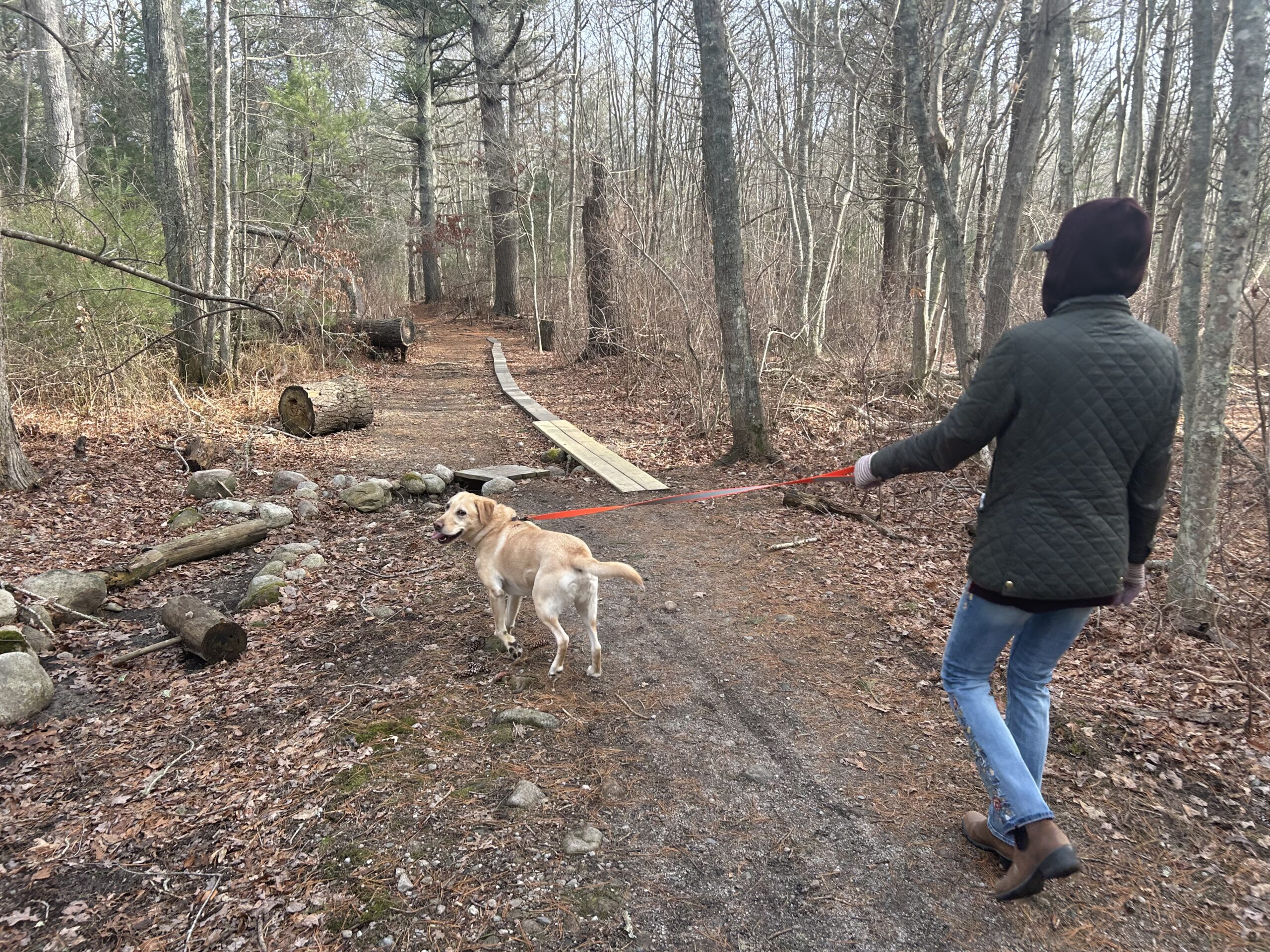
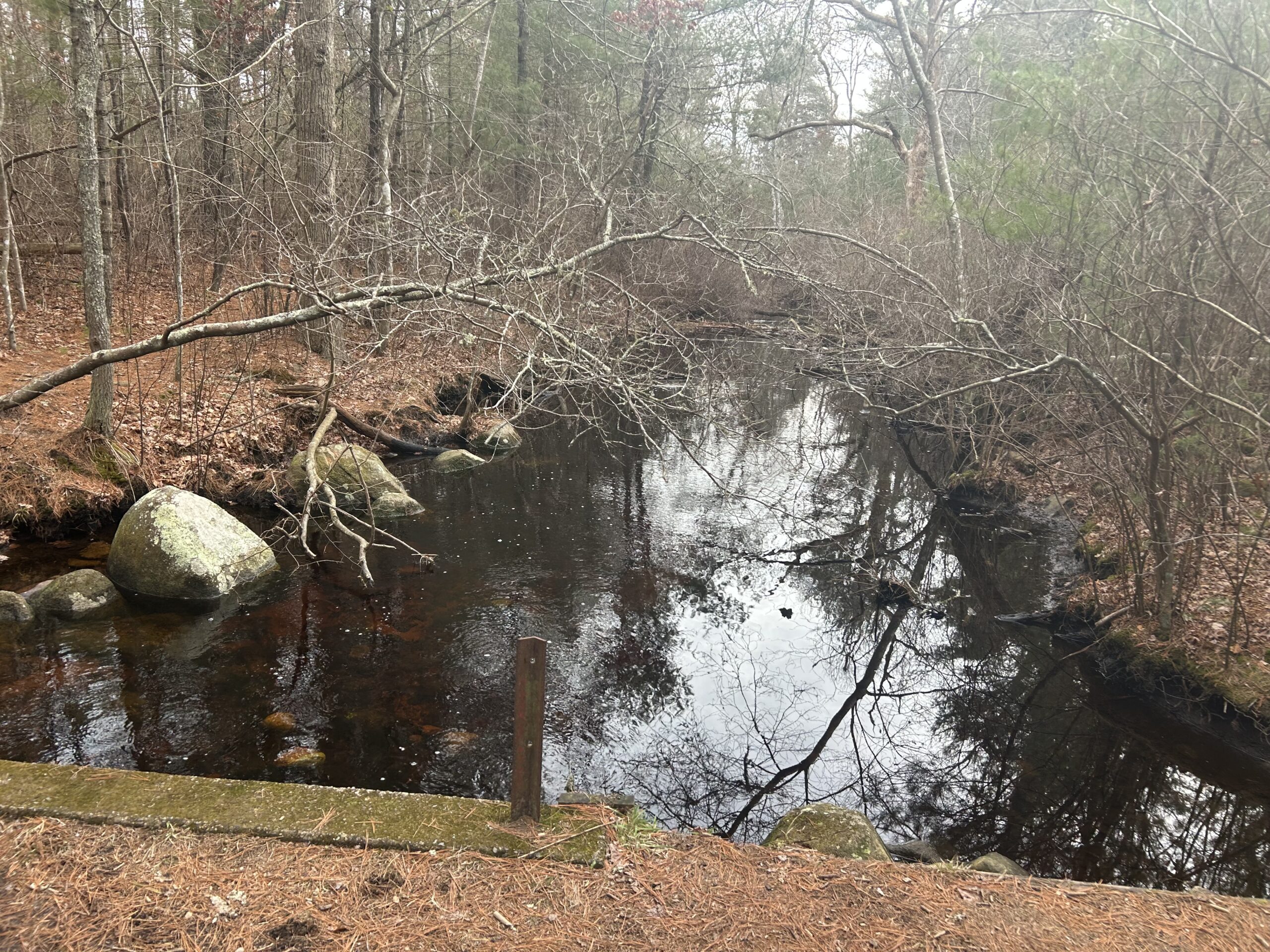
Managed by the Dartmouth Natural Resources Trust, the property features a series of interconnecting loop trails that wind through mixed white pine, white cedar, hemlock, and deciduous oak, birch and beech forest. The eponymous Destruction Brook flows through the lower third of the parcel, providing important habitat for a variety of birds and amphibians.
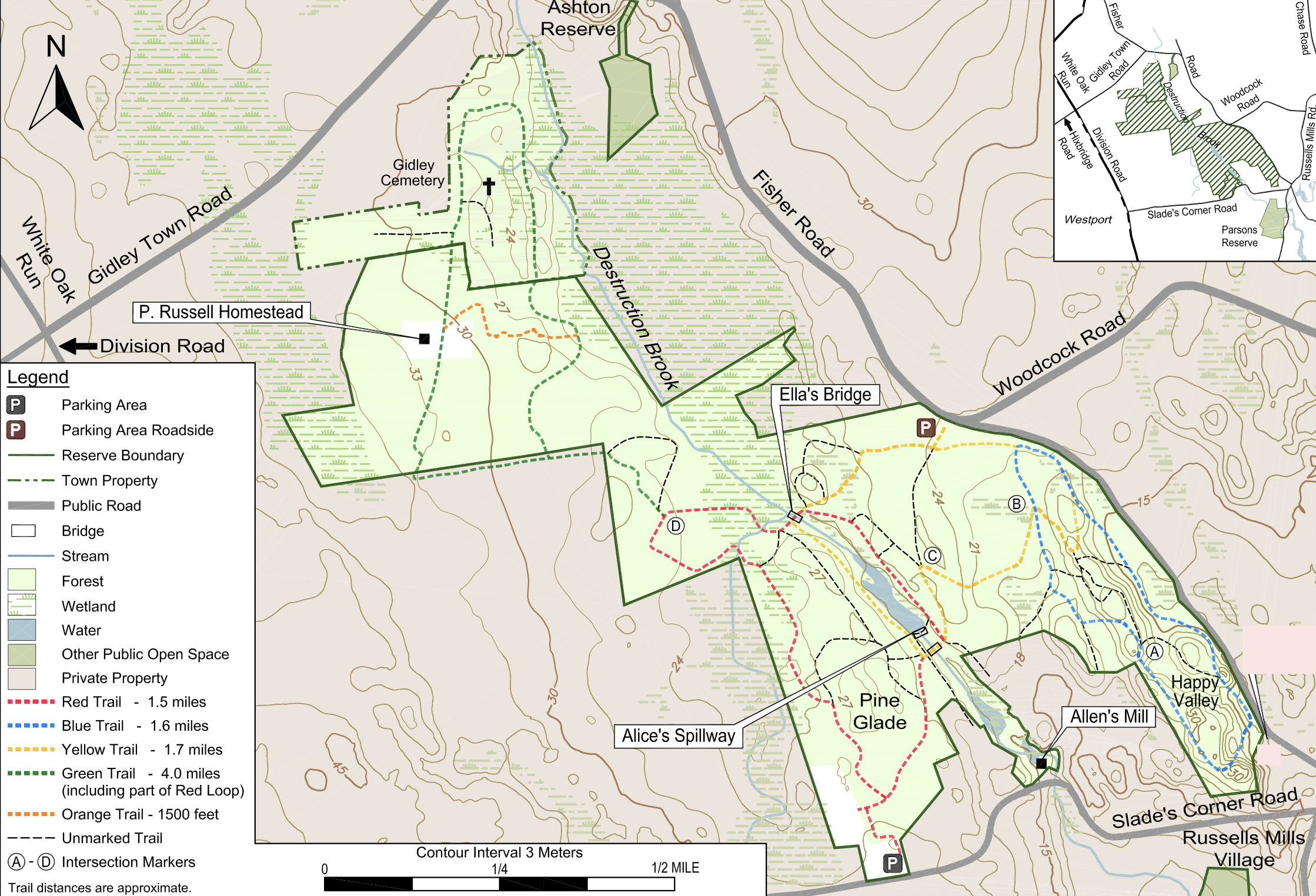
In the northwest corner of the property, you’ll see signs of the abandoned P. Russell Homestead, and a bit further north, the Gidly Cemetery, located on 44 acres owned by the town of Dartmouth.
All the trails in Destruction Brook Woods are well-marked, wide, and easy to navigate, without a marked change in elevation except in the more rugged “Happy Valley” area. Mileage is as follows:
Red Trail: 1.5 miles
Blue Trail is 1.6 miles
Yellow Trail: 1.7 miles
Orange Trail: .28 miles
Green Trail: 4 miles (when combined with part of Red Trail)
As for wildlife, you can expect to see a variety of common Northeast birds, including nuthatch, chickadee, tufted titmouse, brown creeper, bluejay, towhee, cardinal, crow, red-bellied woodpecker, bluebird, downy woodpecker, goldfinch, northern flicker, song sparrow, Carolina wren, Coopers hawk, sharpshinned hawk, junco, wood thrush, veery, ovenbird, and, during spring, many types of migratory warblers. Near the brook, expect to see great blue heron and ducks (eg., mallard, teal, black). In May and June, you might encounter an Eastern box turtle or garter snake. The former mill ponds are home to painted and snapping turtles, as well as wood frogs, peepers, and green frogs.

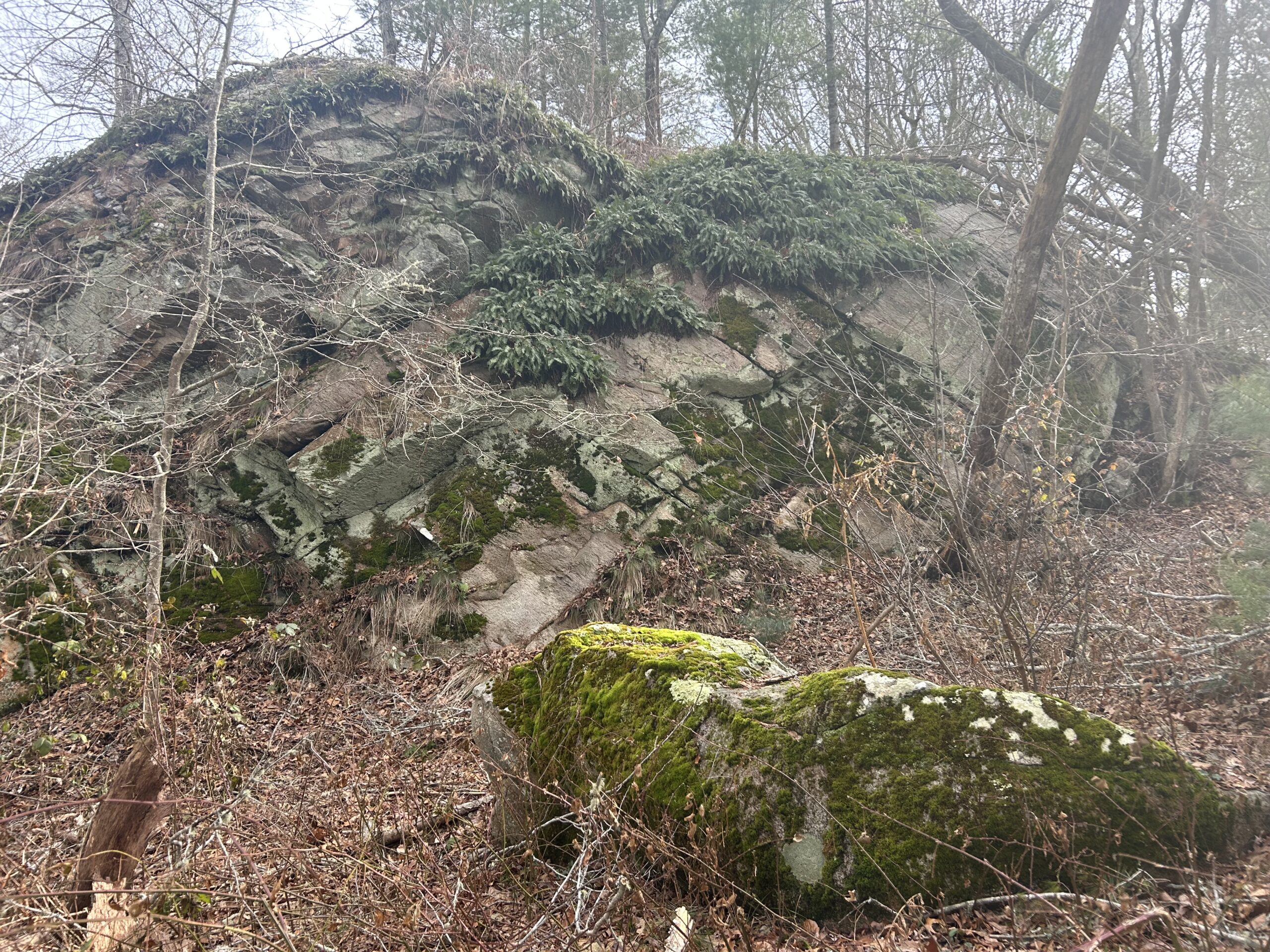
How did Destruction Brook get its name? One story holds that the brook was used by the local indigenous people to kill the farm animals of Colonial settlers during King Phillip’s War. Another is that the broken landscape of granite ledges and glacial erratic boulders in the southern part of the property was believed to be the result of an active fault line (it is not).
As mentioned, dogs are allowed in Destruction Brook Woods if they are “controlled.” Dog waste must be bagged and properly disposed of (not thrown in the woods or left along the trail). Horseback riding and biking are allowed on existing, marked trails, except where posted.
Parking is available in a large lot off Slade’s Corner Road, as well as at the trailhead near the junction of Fisher and Woodcock Roads.